Showing posts sorted by date for query andrew bisits. Sort by relevance Show all posts

Tuesday, April 16, 2024

ECVs and Breech Whisperers

I woke up early (not on purpose! what is going on?!). I was dreaming about my alarm not going off on time and I dreamed I woke up and checked the time and I was suuuuper late...and then I woke up from that dream to check what time it was. Only 5 am!

My day started early with a ride from a lovely, enthusiastic OB who was the first to bring upright breech to Hungary several years ago. He attends vaginal breech births, water births, etc. Our next stop was to pick up Andrew Bisits, aka the "Breech Whisperer," who is visiting all the way from Australia and who will be co-teaching with us.

We drove out to an old Cold War era hospital outside Budapest, built in the 1960s during the worry that the Cold War would become hot and that Budapest would be attacked. This hospital was strategically placed far from the city center (aka, a bit in the middle of nowhere!). There was definitely nothing very warm about this cold war hospital in the main areas.

But the obstetrics department is doing some amazing work, despite the challenges of being a public hospital that is underfunded and understaffed. This is the only hospital in Hungary to openly offer and support vaginal breech birth. They had a team of 7 or 8 OBs come to Wroclaw last year for training. Now they support primip or multip frank breeches and really want to also support complete/incomplete...they're working on their colleague's fears because breech itself is already so radical!

Andrew was invited to teach the staff and some visiting physicians from the Semmelweis clinic how to do ECV. He has a unique one-handed technique and they were keen to learn. They had two ECVs, one a primip and one a G3, both frank breech. He did the first one and talked one of the visiting doctors through the second one, both successful and quite quick.

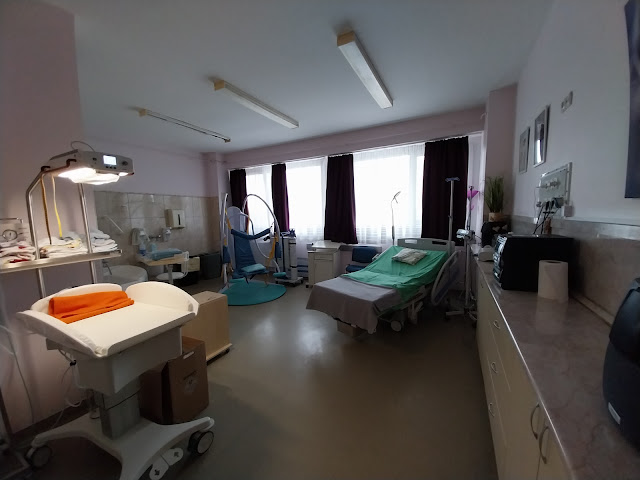
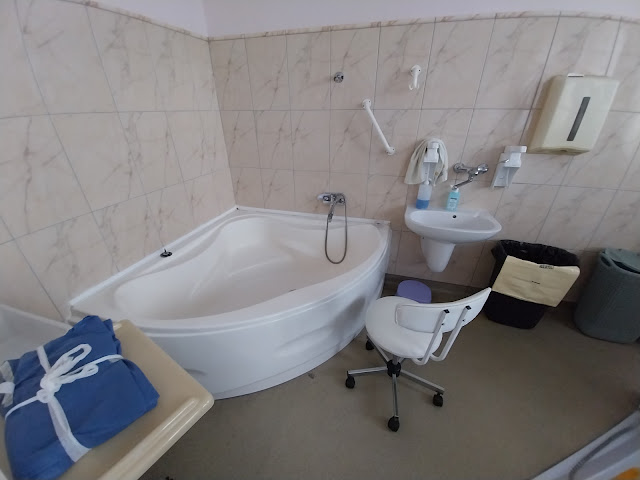
We then got a tour of the maternity department. It has 4 birth rooms, each with a big tub and lovely artwork and birth affirmations. They say things like "My body is opening like a flower" or "When I think I cannot do it anymore, it means I am very close to meeting my baby" or "I can do this." One of the doctors told me that this artwork is very radical in Hungary.


One of the rooms had a huge birth swing contraption, which apparently has only been used once because the mothers find it both unstable and uncomfortable. Apparently the fathers use it a lot, though!


I enjoyed having some time in the car with Andrew--I was able to ask him about what's going on in Australia and ideas for revising his BABE course. He thinks the future of vaginal breech birth in Australia should be midwife-led. The OBs just don't want to learn it or do it, while midwives are generally very keen and very enthusiastic. He thinks midwives should lead breech services and have the OBs as backup for in-labor C-sections. (My paraphrase, but I think I have the gist of it!)

I came home, cooked myself lunch, and worked on video editing. And then I crashed for a bit when I took a break to read. I got through just a few pages and then zzzzz...

After an early dinner, also at home, I decided I had to get outside even though I didn't really feel like it. It was cold today, 7 C, which is about as cold as Nice ever gets. I put on all of the layers I had and wished I also had gloves!

I walked to the St. Stephen's Basilica and then to the Parliament building, coming home along the Danube until the walking path ended. Then back to the Basilica and home.


Read more ...

Monday, May 29, 2017

Anke Reitter: Upright breech skills & recognizing and managing breech complications

Anke Reitter
Upright Breech Skills & Recognizing and Managing Breech Complications
North of England Breech Conference, Sheffield
Day 2

Dr. Anke Reitter is a Maternal-Fetal Medicine specialist and a Fellow of the Royal College of Obstetricians and Gynaecologists. She currently directs the maternity department at the Sachsenhausen Hospital in Frankfurt. She specializes in breech, multiple pregnancies, high-risk pregnancies, and ultrasound--and is also an IBCLC!

I would also recommend reading Anke's presentation about upright breech maneuvers from the 2016 Amsterdam Breech Conference. I omitted repeated material in this summary. Shawn Walker's posts about nuchal arms are also very helpful.

After seeing Gail Tully's presentation, Anke mentioned that she was very inspired--as usual! Her talk fit very well into Gail’s regarding how the levels of the pelvis require different actions.

Anke showed a video of a mother who had had a previous cesarean after an attempted vaginal breech birth; the cesarean happened at full dilation due to abnormal fetal heart tones. Her next baby was also breech, and the mother was very motivated to have a vaginal birth. The baby was born to its torso and the arms came out, but the body remained slightly oblique. Anke noted that the head was tipped back and sideways. The solution: helping bring the head back into the midline. After that, they were able to flex the head. This birth was a classic example of when to help in a vaginal breech birth.

She and Andrew Bisits have created a flowchart showing normal (green) and abnormal (red).

"Hands-off" if progress
"Hands-on" if delay

Rixa's note: This flowchart would go together well with Gail Tully's presentation and her Breech Birth Quick Guide. I have retyped the chart since it didn't show up well on the photos I took.


For Anke, rumping--meaning the bitrochanteric diameter is born--is the point of no return. A baby that has rumped has to be delivered vaginally. She asked the audience: do you all agree on this definition?

From Anke's time in Bergen, Norway, she learned everyone there does Løvset for breeches. They don’t know other maneuvers; they "really love Løvset." The key message is to grab something with a bony structure to protect the baby's internal organs, either the pelvic girdle (mother on back) or the shoulder girdle (mother on hands & knees).

Anke remarked that in Sydney, where Dr. Andrew Bisits works, most of the babies have no problems with the arms. She wonders whether we have maybe started to interfere too early? She turned to ask him, "Andrew, why do you have so few situations when the arms/shoulders are held up?"

Andrew: When we are using the birth stool with the possibility of going to H&K, the arms sometimes might be a bit extended, but they’re always low enough to release easily. I’ve never encountered anything as difficult as that.

In real life, if there is a nuchal arm, the body often is not entirely out and you have to go inside the mother to get to the shoulders.

Elevate and Rotate: When you turn a baby with the shoulder grip, don’t pull down. You might even want to push the baby up just a bit, and then turn it. Turn in the direction the baby’s arm is pointing. She often feels some resistance as the baby’s nuchal arm is just starting to slip past the head. Overcome that resistance, but remember: no traction. Turn a full 180, then 90 back. The baby should end facing the mother's anus.

From Louwen et al
Once the bitrochanteric diameter is out, you should have the whole baby out within 3-5 minutes.

Betty-Anne Daviss: There's been back and forth about whether you should be leaning forward on the bed. If you get a mother up on the birth stool, it often fills the hollow of the sacrum and the baby comes right down. When we watch these videos of mothers doing prayer positions, that’s the opposite of getting mothers upright on the stool. I’m trying to reconcile that.

Jane Evans: Regarding Andrew’s comment: maybe leaning too far forward encourages the anterior arm to be caught.

Gail Tully: Yes, you’re closing the brim if you lean over.

Time is an issue. After you release the arms, you still need to be aware of what’s happening. Don’t wait 1-2-3-4-5 minutes after the arms are born, even if the other signs are good. Be proactive, especially if you have less experience.

Gail: Yes, because you don’t know what you are going to run into next.

Shawn Walker: With women who have high BMIs, sometimes we need to lift the buttocks up. This releases the soft tissues to help the head release. It’s a soft tissue dystocia.

Anke noted that providers have learning curves as they are adapting to doing breeches on hands and knees. She showed a video of an American OB doing a H&K breech. This OB was hands-on several times when the signs did not warrant an intervention. The audience was visibly wincing and groaning at several points.

After we saw the video, Anke made an important point--this video shows us that learning is a good thing. If we do these trainings and if we start talking about upright breech, we need to really understand the things we learn in these conferences. If you offer a study day, it needs to make an impact in the right direction. This OB had the best intentions and it's great that she offers women the choice of a VBB. The birth would have been spontaneous if she hadn’t touched the baby. But there’s a learning curve at the beginning for providers. Anke herself  had a learning curve.

Shawn: In this video, we need to exercise compassionate understanding that there’s this learning curve. Don’t attack and be judgmental. We all change and adapt as providers. We need to understand providers’ learning curves so we can teach more effectively.

Jane: It’s really difficult for some people to turn things over when they are used to seeing women on their backs. Most people understand if I talk about following the curve of the sacrum. It’s easier to follow the sacral curve if you do the birth "upside-down" (having the woman upright or hands and knees).

Anke mentioned a few indirect maneuvers to help free the head:
1. Gluteal lift: It can release enough soft tissue to help a non-nuchal arm come out.
2. Maternal pelvic shift (push mother’s entire pelvis forward): This will help deliver the head according to the pelvic curve.
3. Controlled head delivery using the shoulder press (Frank's nudge) and modified MSV

Why still offer vaginal breech delivery?
Around 30% of breeches are still undiagnosed when labor begins. All maternity units must be able to provide skilled supervision for vaginal breech birth where a woman is admitted in advanced labor. Protocols for this eventuality should be developed.

A woman should be referred to a center if her own unit cannot provide the service. Centralization is the best strategy to ensure the most experienced team involved. You need a 24/7 "breech squad."

Vaginal breech birth prevents the first cesarean and thus a scarred uterus. Offering vaginal breech birth is an important factor in reducing the cesarean rate among primips. VBB can also help lower the repeat cesarean rate. This is important at both an individual and population level.

Finally, cesareans have a major impact on the life span of women in developing countries. (Rixa's note: as an example, see Dr. Thomas van den Akker's presentation Who pays the price? from the 2016 Amsterdam Breech Conference.)

Reviewed by Anke Reitter, May 29, 2017
Read more ...

Sunday, May 28, 2017

Anke Reitter: Setting up a breech service in Sachsenhausen Hospital, Frankfurt

Anke Reitter 
Setting up a Breech Service in Sachsenhausen Hospital, Frankfurt
North of England Breech Conference, Sheffield
Day 2

This is the second of 3 hospitals presenting about starting a vaginal breech service. The other hospitals include the Oxford Breech Clinic and The Jessop Wing in Sheffield.

Dr. Anke Reitter is a Maternal-Fetal Medicine specialist and a Fellow of the Royal College of Obstetricians and Gynaecologists. She currently directs the maternity department at the Sachsenhausen Hospital in Frankfurt. Anke did her obstetrics residency in the UK 20 years ago, which is why she is a FRCOG.

Anke agrees with Anita Hedditch’s recommendations for setting up a breech service. It sounds so logical and easy to set up a breech team, but in real life it is much harder. For the past two years Anke has been a consultant obstetrician and MFM specialist at her new hospital, and every day is a new challenge. She didn’t just start up a breech service; she was also building up her own obstetric unit.

When Anke came to Sachsenhausen in October 2014, it was a small teaching hospital doing only 800 births/year. Over the past two years, her unit has undergone many changes. Besides adding a breech service, Anke has opened a perinatal medicine department and offered high-risk pregnancy care. Her own team is comprised of two Senior Registrars and two Junior Doctors. There is no pediatric unit on site.

Her hospital's birth numbers have been going up. In 2016 they had 1,113 births, compared to 835 in 2014. The number of breech births also rose, from 30 in 2014 to 71 in 2016. Over that same time period, their cesarean rate has decreased from 36.6% to 23.6%, while the instrumental delivery rate has increased from 3.8% to 6.6%, since she uses forceps.

She urged providers and hospitals to record and share their own data. Even if you don’t have a large number of breech births, it’s important to share your outcomes with women.

Setting up a Breech Clinic
Setting up a breech clinic requires the involvement of all members of the birth team: midwives, physicians, and other medical professionals such as nurses and pediatric staff. You will need to collect and provide high-quality, consistent information. As you develop your unit's guidelines, consult other breech centers to see which guidelines they follow.

Your staff will need regular skills and drills training. Anke feels that it is wrong to put vaginal breech birth as part of an emergency obstetrics training day. It should be taught separately as a normal skill, not an emergency skill. Doing skills and drills is very important for breech--and also great fun. Anke has convinced some her team of this. They now enjoy playing around with the obstetric training models. They videotape simulated births and have become more relaxed with being filmed and with sharing and debriefing how the simulations went.

As the pregnant woman nears the end of her pregnancy, Anke's unit does an ultrasound to estimate the fetal weight, determine the type of breech presentation, and detect fetal anomalies. This last step is very important. Anke told a few stories of doing her own scans while counseling women with breech babies. She has discovered abnormalities that the women's own doctors hadn’t detected despite multiple scans.

The woman also needs informed consent. This process requires time--they schedule 30 minutes for the first consultation--and usually more than one visit. They provide written information to the woman, both their own guidelines and published guidelines. Their unit has a checklist to ensure comprehensive counseling for every woman and to document that all of the above steps were completed.

Anke's breech clinic offers the whole range of options: ECV, vaginal breech birth, and planned cesarean. External cephalic versions are done in the labor ward starting at 37 weeks. They use 250 ug s.c. of Terbutaline and do CTG before and after the ECV. The women go home the same day as the procedure. In the literature, ECVs have a 50% success rate with a 2% rate of complications and 2% of babies turning back breech. Their unit has a 60-70% success rate with ECV. She does the ECV together with a skilled Turkish colleague.

Primips, including multips who have not given birth vaginally, are given an MRI scan. The RCOG's Greentop Guidelines say that the evidence for MRI scans is unclear. Anke comes from the Frankfurt school, where primips have routine MRIs. They exclude around 20% of primips for vaginal breech birth based on their obstetric conjugates.

For planned cesarean sections, Anke's unit waits for labor to start on its own before doing the surgery. She noted that this will increase the rate of after-hours unplanned cesareans.

You will want to start by offering vaginal birth to the "easy" candidates: a baby with a flexed or neutral head, a baby that is not too big (under 3800g) and not too small (<= 10th percentile), no footling or kneeling presentations, and no prenatal fetal compromise. There are many unanswered questions about VBB: amniotic fluid levels, parity, provider experience level, frank vs. complete/incomplete presentation, and how to correctly choose the woman.

Advantages, disadvantages, and words of advice
Providing a breech service opens the door to physiological birth and to upright birth positions. Providers need to "respect the mechanism" of vaginal breech birth.

Offering a breech service can also make your obstetric service more attractive to women; Anke's unit has witnessed this first-hand as their numbers have nearly doubled since 2014. On the down side, a breech service means a higher work load and more staff needed to fulfill all the expectations (counseling, 24/7 provider availability, staffing for more unscheduled cesareans).

Setting up a breech service involves a learning curve and requires that everyone in the team is on-board. It takes time; be patient and allow things to grow. And most importantly, enjoy the opportunity to offer breech birth!

Research backing up your practice is important. Anke referred to the 2017 Frankfurt study on upright breech birth authored by Frank Louwen, Betty-Anne Daviss, Kenneth C. Johnson, and herself. It is the first study with a large cohort of vaginal breech births in the upright position, and it compares both upright and dorsal breech births. The Frankfurt study has introduced a new understanding of the cardinal movements of the breech and new maneuvers to resolve problems. Unlike large registry studies, this study had detailed information about each birth, making thorough assessment and comparison possible.

Anke worked at Dr. Louwen's Frankfurt clinic before coming to Sachsenhausen, so she knows that approach firsthand. Even in that hospital, where vaginal breech was considered safe and common, half of the planned cesareans for breech were at the mother's request. This indicates an ongoing perception among women that breech is unsafe. She lamented that most of the research on breech has compared cesarean with women delivering vaginally on their backs.

Anke stressed the importance of a "complex normality" paradigm, which recognizes the largely successful physiological process of a breech birth as "normal," but requiring unique skills and experiences. She references the following publications:
In order to create a sustainable solution to breech, health professionals need to learn to "tolerate uncertainty" rather than trying to eliminate it. (See Simpkin AL and Schwartzstein RM. Tolerating uncertainty--the next medical revolution? NEJM 2016)

Vaginal breech birth can be a tremendous learning opportunity for providers. At the 11th Annual Normal Birth Conference in Sydney 2016, obstetrician Andrew Bisits commented, "Every breech birth was a goldmine of learning about normal birth."

Looking to the future
We have not finished learning. We need to continue to connect high quality care with physiological breech birth. We need to review our critical outcomes and create a national/international expert board. We should also collect more breech data internationally. We need to get the younger generations of midwives and OBs leading the charge because the older ones are burning out.

~~~~~

Dr. Andrea Galimberti commented that it's always interesting to see the differences in practice abroad. It is challenging to see things outside your own comfort zone.

Reviewed by Anke Reitter May 28, 2017. 
Read more ...

Saturday, May 27, 2017

When the birth doesn't go as planned--a manager's perspective

Andrea Galimberti, Clinical Director of Obstetrics
Paula Schofield, Nurse Director and Head of Midwifery
Sheffield Teaching Hospitals
North of England Breech Conference, Sheffield
Day 2


Rixa's note: This presentation addressed many processes and structures unique to UK. where there is a nationwide, uniform procedure for reporting and investigating adverse events. 


With regards to adverse events, what is “special” about breech?
  • There are a wide range of clinical opinions about vaginal breech birth.
  • Breech is an emotionally charged topic. If you expect something to wrong, your experience will confirm what you expect. It creates a very unique set of circumstances within the obstetric service. Normally clinical incidents are accepted in the obstetric service, but breech evokes a different set of reactions.
  • There are varying levels of practical experience between staff at different levels of seniority. This is again peculiar to breech and unlike most things in obstetric services. You might have a young consultant with more experience in breech than an older consultant, or perhaps a very trained midwife and a consultant with no experience. This changes up the normal hierarchy/framework of calling for help.
As managers, we have 5 tasks when something goes wrong (not unique to breech)
  1. Determining how serious the event is
  2. Interacting with the Trust at a corporate level and with the Commissioners
  3. Dealing with and supporting the family involved
  4. Dealing with and supporting staff who were involved with the clinical incident. They are still our colleagues.
  5. Reassuring HM Coroner that the care provided was to appropriate standards
The most important thing for clinical managers is to AVOID KNEE JERK REACTIONS! We have to be calm and supportive because another breech might come the next day and we still have to deal with that woman and that labor. We can’t create a system that makes people unable to look after the next case.

1. How do we decide how serious an event is? 
A Serious Untoward Incident (SUI) is defined as having such magnitude that the consequences have a serious impact on individuals or the organization. Based upon the "measure of consequence," birth-related significant incidents in the UK may classify as Major (leading to long-term disability) or Catastrophic (leading to death).

The risk of litigation and/or loss of reputation are also extremely high. Newspaper always love to get hold of dead baby stories.

The grading of an incident is based mainly on its consequences. Incidents graded as Serious Untoward (SU) or Moderate (M) always require a formal investigation to include root cause analysis. They would also involve a “duty of candour.” All SU or M incidents must be shared with the family involved. We can’t withhold that information; we must volunteer and share with the family all of our findings and our action plans.

2. How do we interact with the Trust and the Commissioners?
The point of contact is the Trust Clinical Governance Group. These people come from all walks of life and professions, and they are the voice of patients within the Trust at a high level. We also have a SUI group that has the final word on the grading of an incident.

If the incident is classified as SU or M, the SUI group will oversee the investigation and its reporting to the Commissioners. They have timescales for reports and actions. If the incident involves doctors in training, it is shared with the Director of Postgraduate Education.

3. How do we deal with and support the family involved?
We ensure that patients are made aware of the incident and receive an apology as appropriate. Sometimes there aren’t things to apologize for, but we should apologize when there is something warranted. Where continuing care is required, this will normally remain the responsibility of the patient’s Consultant who was involved, but sometimes it’s appropriate to change care to someone else. Postnatal support can include counseling or psychologist input. PTSD is a well-recognized consequence of difficult births.

4. How do we deal with and support staff members?
If something serious or catastrophic happens, we offer immediate practical support, day or night. We come in immediately to help at critical moments to make sure that people complete their work and records and to maintain the functionality of the obstetric service. It can be very difficult for staff to continue on with their shift after a difficult event. If it’s near the end of the shift, we might support the staff to go home once they have completed essential tasks.

Before the staff come back to work, it’s really important to meet with them, not just send them back to work the next day. In the meantime, we take a look at the case and review if the staff members can continue to work or if they might need to change areas for a time. Once the staff comes back, some people seem very able to deal with it and others don’t.

The staff will often need to be interviewed about the event, and that can be very difficult. The sooner you do the interviews and investigation, the better. We (Paula and Andrea) either do the investigations ourselves, or we engage a senior midwife or obstetrician to do it. We also prepare the Coroner’s Inquest.

5. What do we do during the investigation process?
During the investigation, staff can bring in a colleague if they wish. The staff need to understand the value of being interviewed. When things don’t go well, the medical records tend to be very scrappy. We can’t assume decision-making rationales; we need to be able to interview the staff to get their thought processes.

We try to encourage our colleagues to get support from avenues other than ourselves: maybe their GP, workplace well-being counselor, occupational health doctor, or Trust psychologist. People who see a psychologist give very positive feedback about their experiences. We are working towards having a full-time psychologist for our OBs, midwives, and neonatologists. We are optimistic that we are going to secure this full-time support. We are mindful that families are in the same position and that the full-time psychologist would also be there to support the families.

Staff feedback on the investigation process
The SUI processes can take months to decide, and the staff can get angry or frustrated at the delay. SUI reports tend to have lots of back-and-forth to clarify what happened; it takes patience.

The staff need to prepared if the investigation goes to a Coroner’s case. If that happens, they will have a Trust barrister who will support them at the Coroner’s court. When they go to the Coroner’s, we have to absolutely clear of the facts and statements. That’s why we need to support the staff right away.

We also develop action plans. It can help at the Coroner’s court to show you have developed one. The SUI reports are kept transparent, and the parents remain informed of what is happening. It is a transparent process. If the family feels they are kept informed, they are generally very grateful. The best people to champion changes and action plans are the people involved in an incident; it’s often hard because these people can feel publicly shamed among their colleagues.

~~~~~

Betty-Anne Daviss: I wrote to Helen and Julia that I love the model they are creating and that it’s a model we should be following. I am a midwife doing vaginal breech births in a hospital where most of the physicians are not supportive. The pediatricians and nurses tend to want to make the Apgars lower than they really are. They make a big deal out of every single birth that occurs because the people in the room haven’t seen it often, so they think what they see is a bad outcome. But to me, it’s a great outcome and normal for breech. Things get created into a bad incident when there was nothing bad at all.

Andrea: This talk was about serious or catastrophic incidents: death or permanent disability, not low Apgar scores. Yes, there is a tendency to make things worse than they are. For minor incidents, staff are encouraged to report worrisome things (inadequate staffing levels, etc). Everything like that is investigated, but at a much lower key. Internal investigations don’t take any legal process; that’s a separate process. Our investigation is simply to learn what happened and communicate it to staff and family.

Paula: Yes, people can be very supportive. We have to be very cautious and very careful. We want to keep our colleagues well-supported, but we also can’t protect them from investigations and self-analysis. As OBs and midwives, we are terrible at deciding something is bad when it’s not really.

Andrew Bisits: I am a manager, too. When an adverse event happens, the most important thing is that people have to be stopped from any discussion about it immediately. That’s the most destructive phase--the knee-jerk reactions. You spoke about the very formal process. The other area of interest is how people get together and talk about it at a clinical meeting. It’s an important opportunity to support staff and to enhance teamwork. It’s also been, unfortunately, an opportunity to destroy teams as well because of the way people talk.

Andrea: Yes, we do tend to have debriefing meetings with a leader/mentor who wasn’t involved. The purpose is to gather information and allow them to download in a supportive environment. We also have clinical review meetings for various outcomes. Yes, you’re right, sometimes they’re scientific and sometimes they’re very emotional and destructive. That’s why we have the controlled mentor meetings to be sure they’re constructive.

Paula: We need to be very cautious with the duty of candour and with what we share in certain multidisciplanry meetings. We have to be sure things are factually based.

Q from a Trust midwife: Instead of doing individual interviews, we bring groups of peers together and give everybody an opportunity to discuss their personal statements in relation to the incidents. People were worried about what other people were saying, so the group interviews helped relieve that worry.

Paula: When we do our interviews, the senior person interviews the staff member involved. At the end, if there is contention, we bring everyone together for a group meeting. When I look at SUI reports and other internal governance documents from various Trusts, some are doing incredibly well and some are doing terribly.
Read more ...

Tuesday, May 23, 2017

Andrew Bisits: Intrapartum CTG monitoring in breech presentation

Andrew Bisits
Intrapartum CTG monitoring in breech presentation
North of England Breech Conference, Sheffield
Day 2

Andrew Bisits is the Director of Obstetrics at the Royal Hospital for Women, Sydney, Australia. His hospital sees over 4,000 births per year. Andrew is working on several initiatives to promote normal birth by establishing primary midwifery care for women and by attending vaginal breech births. He has also created a vaginal breech training course, Becoming a Breech Expert (BABE).

Today’s presentation examined the evidence for CTG monitoring in breech presentation. To what extent is there evidence? To what extent are doing it because it’s part of our comfort zone and what we’ve always done?

Andrew does not have firm answers, but finds this topic necessary and helpful to discuss. At this conference, people can think clearly and are invested in the issue. At home where he works, people are so busy and so fearful that they just react, they don’t think. Here at this conference, we’re sitting back and thinking, discussing, and trying to look at evidence in the broader context. There are so many pressures back at the workplace that you can’t think about these things.

He will ask two main questions about CTG monitoring:
  • Do normal women with normal babies need it?
  • Can CTG help make VBB as safe as cephalic vaginal birth?
There are small—perhaps significant—differences between cephalic and breech vaginal birth.

The question of CTG monitoring has to be viewed within the context of the various pressures on providers to intervene: We have this normal process, yet we continually feel pressure to intervene. Some of the pressure might come from evidence, but social pressures and a huge medico-legal industry exert the most pressure. Despite being in an evidence-based era, the pressure to intervene based on factors other than evidence—medico-legal cases, social pressures, various opinions—is huge and cannot be ignored.

Learning from adverse events:
What prompted Andrew to talk about this? He was party to a number of adverse events in New South Wales related to breech. By adverse events, he means neonatal mortality (NNM), perinatal mortality (PNM), or very severe asphyxia. He’s familiar with 8 serious adverse events over the past 2 years: 3 births had mechanical difficulties. 2 births had clearly abnormal CTGs (blindingly obvious ones, no dispute). But the 3 other births had CTG patterns where the outcome was unexpected. Again, glaringly unexpected.

How breech relates to shoulder dystocia:
25 years ago, the whole approach to shoulder dystocia was terribly primitive. Well-meaning providers would yank, shout, and scream. The baby might have a bad outcome and the staff would be traumatized. If you read textbooks from that time, one instruction was to apply firm traction on the head. That’s been reversed because even though the evidence is not watertight, we’ve systematized the whole approach to shoulder dystocia, and it’s made a difference. He no longer hears about people shouting and screaming. Rather, today it’s very quick and focused: We got the woman into McRoberts, we did this, we did that, we did the next thing, and the baby came out. The providers followed a series of steps clearly.

A similar thing is possible with breech for mechanical problems; we can make those births safer. Knowing the normal and the abnormal in detail allows us to prevent the majority of nasty mechanical problems in a breech birth. We have to keep thinking about it in a creative way, but it’s manageable.

The tricky question, however, is the issue of intrapartum monitoring and how the baby behaves as a breech vis-à-vis oxygenation. When a CTG is glaringly abnormal, there’s no argument. You do something. You act right away in cases of persistent bradycardia or persistent tachycardia. But most cases are in between these two extremes.

Making breech birth safer
There are 2 achievable goals in making breech birth safer: getting better at resolving mechanical difficulties and acting promptly in the case of clear CTG abnormalities. But that leaves us with the remaining breech births with bad outcomes in which the CTG monitoring does not indicate a problem.

The evidence for CTG
The next part of Andrew's presentation delved deeply into the literature on CTG monitoring. The evidence we rely on for fetal monitoring primarily comes from cephalic births. He referred to the 2017 Cochrane review, with regard to neonatal seizures. If you looking at high-risk subgroups, the effect of CTG on NN seizures is not as strong as with low-risk groups. That has an implication for breech birth. The nastiest outcomes we have are HIE, including perinatal death. If the effects more obvious in the low-risk group, that might argue for doing monitoring for breech births, even for low-risk breech births.

Whatever evidence we do have, it’s indirect. The critical point is that CTG monitoring halved NN seizures with no effect on mortality, no effect on longer-term cerebral palsy, but with an increase in cesarean/forceps deliveries. Andrew noted, though, that this short-term difference in NN seizures didn’t translate into longer term CP.

(Rixa's note: Andrew referred to an Irish study but I didn't catch the citation; perhaps it was the 1985 Dublin RCT of IP fetal heartrate monitoring?)

INFANT study
Next, Bisits discussed a recent study by Brocklehurst et al, the INFANT study (Lancet March 2017). It was a RCT of 46,000 women in the UK. All women had indications for FHR monitoring (traditional risk factors). They were randomized into two groups: CTG with or without computerized decision support. Preliminary evidence suggested that computerized decision support might lead to better outcomes by eliminating interobserver variation and thus more accurately indicate when intervention was needed. This was a very well-designed RCT. The trial groups had very similar demographics and a similar frequency of induction, epidural, cesarean, forceps, and spontaneous birth.

3 years ago, Brocklehurst said that if this study doesn’t show a difference in outcomes, it would really raise questions about the overall value and future of CTG itself.

Andrew noted that big money was fueling this study. He didn’t say this maliciously—but 7% of the NHS budget goes towards settling claims in cases that involve CTG. 7% of the NHS budget! No wonder there’s an incentive to get the best out of CTG and find ways to minimize these huge payout cases.

The study itself found no difference in outcomes between the two methods of CTG interpretation--this despite big hopes for this new computerized technology. The researchers followed the babies for 2 years after birth: still no differences. Andrew noted that some of the authors dropped out of the study because of the findings.

We’re in an ongoing quagmire regarding CTG in general. And it’s a very messy quagmire. Andrew noted that CTG monitoring is “welded into the fabric of maternity care” because of medico-legal pressures, rather than because it’s effective. Yes, it does have a marginal effect, but it’s not as much as it’s made out to be.

When he talks to solicitors about CTG, they tell him, “What we believe is the CTG. What we hear from the doctors, that’s all subjective. But when we see something on paper, that’s something we can all agree on.” Despite all of its limitations, we are stuck with CTG.

The major conclusion of the INFANT study was that we have to look at other ways of monitoring fetal oxygenation during labor. CTG has significant limitations in being able to reduce major hypoxic damage to babies.

What are the implications of the INFANT study for breech babies? It depends on how you interpret the study! Some people would conclude that you should be doing CTG, others would conclude you don’t need to.

Andrew next referred to a 2016 Finnish study on CTG in breech versus vertex delivery by Toivonen et al. The authors found that late decels and decreased variability were more common in breech labors compared to vertex labors. For example, late decels were seen in 13.9% of breech vs 2.8% of vertex deliveries, and decreased variability in 26.9% of breech vs 8.3% of vertex deliveries. Overall, the authors found that CTGs are different in breech labors compared to vertex; whether or not those differences are clinically useful is still in question.

Shawn Walker: Yes, I also felt that this study was interesting but not strongly useful for clinical outcomes.

Jane Evans: Why? Do more breech babies have shorter cords so they are pulled more? We need to figure out why. These are all the things that would affect that. Can we measure the stress levels of women who aren’t on CTG vs who are (via a swab)?

Andrew Bisits: Yes, you could do that. There are a number of theories about the cording of breech presentations.

ST-waveform analysis
The next study of interest was a 2014 study by Kessler, Moster, and Albrechtsen titled Waveform analysis in breech presentation (BJOG). The authors took a series of 433 breeches and 5577 vertex babies who were monitored with ST-waveform analysis (a form of fetal ECG, different than traditional electronic monitoring). In theory ST-waveform analysis provides a better assessment of cardiac oxygenation.

Has it proven to be so? Overall there’s no glaring benefit to ST-waveform analysis. There are some enthusiasts, but if you look at the hard evidence, there are no huge standout figures. The vertex group was a higher risk group overall compared to the breech group. See the following slide for details:

There were 3 breech babies with significant problems. See the following slide for details.


In the one case of fetal death, the ST monitoring didn’t suggest an abnormality, nor was it a difficult birth. Maybe there was something wrong with baby? In this case, the CTG provided a falsely reassuring result.

There were also 2 cases of moderate HIE. One was quite severe with nasty seizures. But it wasn’t picked up in the monitoring, nor was it a difficult birth. In the other case of HIE, there was some suspicion due to the CTG tracings.

Overall, 2 of the 3 bad outcomes were not picked up by fetal monitoring. This means CTG/ST has a falsely reassuring rate of 2/500. This compares with the rate of severe outcomes with cephalic high-risk births (2/500). Would this have been higher in the breech group without monitoring? This is the question that is tough to answer.

Main conclusions (from a dearth of evidence): 
There are no clear answers about CTG monitoring for breech babies. It’s hard not to recommend monitoring; the social, institutional, and medico-legal pressures are too great. It’s too welded into the fabric of our care. Andrew doesn’t like saying that, but he thinks it’s the reality.

We need to be clear with women about the effectiveness of monitoring, and then a decision can be made whether or not it is done. We also need to look for other methods of monitoring the baby’s oxygenation during labor. Perhaps we should consider the use of buttock lactate/ph. In the 80s, these came up with a lower than normal pH for breech babies. RCOG guidelines said it’s not recommended.

~~~~

Q from Julia Bodle: I’m thinking back to what CTG does and doesn’t do—halving the rate of NN seizures. What are the long-term outcomes for the babies who have NN seizures?

Andrew Bisits: There are 2 differing views on this.
1) In the follow-up from Dublin CTG trial, they could not detect an excess of CP.
2) If you read the Cochrane review and the comments that they invite after it, a Swedish researcher quotes a Swedish study that looks at grade-2 HIE and its longer-term implications. From this particular Swedish study, there is a 48% incidence of CP. Further, 18% of babies had some significant cognitive issue (not sure at what age). Only 25% were actually normal at age 15. NN seizures are not benign in the long-term, according to that Swedish study. I always believed in that Dublin data, so I’d need to look up the original study the Swedish researcher citing.

Andrea Galimberti: In the UK we tend to prefer intermittent monitoring when possible because women can move around. What is the difference between high-risk women monitored and the low-risk women who have intermittent?

Andrew Bisits: From a biological point, nothing! From a psychological standpoint, lots.

Q from audience member: What about other outcomes besides CP, such as ADHD, autism, etc. Have you read anything about this?

Andrew Bisits: There is a weak link with ADHD. The slightly concerning one is cognitive impairments noted at age 15-17. They’re the ones that have been reported in Sweden.

Q from audience member: Might it have more to do with NN management and cooling?

Andrew Bisits: We haven’t changed the instance of CP despite all these advances; it’s still 1/1000.

Q from audience member: There’s no good evidence that any monitoring improves the outcomes because nobody’s done the studies. Certain CFM has known harmful effects. We may be doing a lot of harm while trying to reduce these small things.

Andrew Bisits: In the cold light of day, I would agree with you. The problem is we’ve got this whole mindset that is welded—not by a thread—into the whole fabric of maternity care at all levels.

Q from audience member: Don’t we have to make sure we do no harm, first?

Andrew Bisits: We would hope, yes.

Betty-Anne Daviss: As a practitioner, we have to be very careful in Canada and stay very close to the SOGC guidelines not to raise the ire of the OBs in our unit. I think we have to start understanding what the normal breech is with some of our other parameters. I’m concerned that we’re making the decision about what a normal Apgar is for a breech baby, because Apgars are different for breeches. We have to normalize a low pH for breech babies. We have to put those together with the monitoring. We should start to write down things like floppy/not floppy that seem to raise our concern. As researchers, we need to start putting those things together for what the norm is for breech.

Emilano Chavira: There’s such an obvious parallel between pros/cons of CFM and the breech birth itself. For example, the presentation by Lawrence Impey focusing on all the outcomes of NN survival vs death, and acknowledging that it’s just one outcome and there are so many others we can look at. Your presentation looked at NN seizures/death…but what about everything else—maternal procedures, cesarean sections—that comes with monitoring? I’m very sympathetic about both the audience’s questions and with your presentation. Is there any option at all? Can we engage in informed consent for these things? What approach does the mother want to take? Maybe informed consent is a first step towards dislodging this “welding” that we have.

Andrew Bisits: Yes.

Julia Bodle: This INFANT study affirms my belief that the world is a much more corrupt place than I had thought it was. I just saw a press release from the company that makes the K2 Guardian CTG technology, the one used in the study, claiming that it reduces stillbirth and brain damage! K2 medical systems is sending these press releases out, clearly misrepresenting the evidence from the INFANT study. In fact, the RCOG and BFMFS just sent a joint statement warning people about this press release. I just got the notice yesterday in my email. It’s outrageous! On the upside, you can use this study in court in your defense; the type of monitoring doesn’t make any difference.

(Rixa's note: I can not find the RCOG/BMFMS statement online, but I did find this news release mentioning it. K2 Medical systems is making those claims by comparing the outcomes of the INFANT study with the outcomes of the BirthPlace study.)

Andrew Bisits: Do any units do intermittent rather than routine CTG for breech?

Julia Bodle: The current policy is to talk to the women, give them evidence, and then they choose. Our unit has a policy that it’s recommended.

Andrea Galimberti:
We are discussing modifying the policy. And of course women can choose.

Read more ...

Thursday, April 27, 2017

Panel discussion on breech, part I

Panel Discussion, part I
North of England Breech Conference, Sheffield
Day 1

Panel members:
Cathy opened the session with a commentary on Montgomery (see Johanna's presentation for specifics): use this law proactively. Don’t ask "What does the law say?" Instead, employ this legal framework actively and you will be fine.

Photo used with permission of M.K. who birthed her 2nd child (frank breech) vaginally in Canada in May 2017. 
~~~~
Informed Consent 

Q from a UK midwife: I run a breech/ECV/VBAC service. I have a burning question about whether I or the consultant OBs should be doing the informed consent. I recently posed this question to one of my consultant OBs. My clinic does informed consent as a lengthy process. For example, my VBAC women go to a VBAC class, a VBAC workshop, and see me or another midwife at 30 weeks. Then we go through the women's previous birth and discuss what they want to do this time around. After that point, the women then make their choices. It struck me, though, that maybe I shouldn’t book women for a cesarean once they’ve chosen that route. And who should be the one doing the consent: me, or the consultant OBs?

Johanna: What you’re doing is great. Your practice sounds exemplary in terms of going through all that information, giving them the time, and letting things evolve over the pregnancy.

Betty-Anne: In my area, the doctors aren’t willing to offer those choices after I tell women about their options. That’s why I ended up doing breeches—because the head of Obstetrics said they aren’t willing to do breeches. Be prepared for everybody in the medical staff to hate you, because you’re offering something that isn’t there.

Cathy: This is a genuine dilemma for lots of midwives. Another classic example is home birth. Johanna, what advice would you give to a midwife if you know that their particular NHS service is really poor at actually enabling home birth?

Johanna: I suggest a 2-fold approach. 1) Make it clear to the woman that it’s her decision to make. 2) Go into your places of work and have that dialogue with your colleagues.

Q about Montgomery: If a woman has a request and you’re happy to agree to it, how duty bound are you now to explore the counterpart of those requests?

Johanna: You are still duty-bound to set out all of the different risks/benefits of all of the choices. At first, I wanted an elective cesarean, but when I met with my provider, they set out all of my options, and I ultimately chose a very different kind of birth. [I believe she had a home birth.]

Q: But in the real world, doing that [presenting the counterpart once a woman has expressed her preferences] can be taken in an antagonistic way, as if you don’t want the woman to have a choice.

Johanna: Montgomery shows us how important it is for us to have those difficult conversations.

~~~~~
What if breech isn't an option in your area? Lack of provider experience, difficulties in receiving referrals, etc.

Cathy: What do you do in terms of having a UK unit where vaginal breech birth really isn’t an option? What would you say to midwives in terms of offering the choice of a VBB?

Betty-Anne: I suggest to them that they move. [laughter from audience] Find a better practitioner if they can’t find one in their community. 23-30 years ago I sent people to The Farm, to Guatemala, to Nova Scotia. At one time I was going to send people to Frankfurt.

Cathy: Isn’t that slightly different? The woman who comes into your clinic absolutely wanting a VBB…sure, we can open up proper informed choice to all women, but they may not have the capacity to travel to other places.

Comment from a provider from Oxford about receiving referrals from other units/hospitals: We have a massive issue with funding because the maternity pay has already gone to the woman's booking hospital. We can’t offer ECV or other services to women from other booking areas.

Julia: My clinical director is very happy for people to come to Sheffield to have their babies.

Jane: Being told that you cannot have a vaginal breech birth because they haven’t got any experienced professionals in the local hospitals is surely a human rights issue. Why are we letting this happen?

Frank: Is there any way to get more information in England about who is experienced? To satisfy quality management in Germany, every clinic has to fulfill a certain criteria. There’s a score that indicates if breech is offered and how many they do every year. (He referred to a person from England who created this score; I didn't catch the name).

Consultant OB from Preston: We have recently expanded our vaginal breech deliveries. We get referrals from neighboring hospitals with small delivery rates because of lack of breech experience. The new 2017 RCOG breech guidelines say that institutions should refer women to experienced centers. Instead of having a blanket ban, there should be more sharing between institutions to help providers train and learn.

Johanna: It’s multifaceted. The first option is to move the woman, but Birthrights doesn’t generally advise that. The other option is to move the professional; start writing the hospital and putting pressure on them, ask them to bring in an outside professional to attend the breech birth.

Q: At Sheffield, can you have visitors come to observe breech births?

Julia: Not right now, but that’s why we organized the conference!

Betty-Anne: It’s not an either-or. When you go to a place where they’re not experienced in breech, they will bait-and-switch. Maybe they’ll say they’ll do it, but then they’ll find every possible reason to move to cesarean because they’re scared.

~~~~~
Inappropriate use of scare tactics

Consultant midwife from Birmingham: A woman in my unit asked for a home breech birth. I was happy to go along with it, but some other providers were very fearful. Some midwives were confident but non-competent. Midwives need to attend training sessions to become more competent. Telling a woman her baby is going to die, over and over again, is a horrific thing to say to a woman. This was told to this particular woman 6 times. We used the Birthrights leaflet to show that this scare tactic was unnecessary exposure of risk.

Jane: I will cover a bit about the National Midwifery Council. It’s the midwife’s responsibility to become skilled, otherwise they shouldn’t be on the register. We shouldn’t get women changing locations to have their breech babies, because it goes totally against physiology.

~~~~~
Undiagnosed breeches

Q: I hate seeing a woman with an undiagnosed breech in labor coming in and a run to the operating theater for an "emergency cesarean." How do you get informed choice in that situation? Where does consent come in in this time-sensitive situation?

Frank: Undiagnosed breech isn’t common in Germany. We do a workup in the woman late in pregnancy, so in most cases we know beforehand. In my study, the women were all counseled at 36 weeks. ECV is offered at 38 weeks. Many women in this study have MRIs if they are functional primips. Undiagnosed breeches are extremely uncommon in Germany, but in the Netherlands they are common. It’s more important to each people how to deal with it vaginally, especially since cesarean is more dangerous late in labor.

Julia: We have undiagnosed breches in our unit. Over the 5 years Helen and I have been working together, we harp on about breech all the time. We talk about it all the time. I'm always getting the pelvis out on the labor ward and showing how the baby just falls out of the pelvis if you turn the pelvis upright. Every single doll and pelvis does the same thing. I do this over and over on the labor ward, and the junior doctors and the midwives now realize how breech works. They get it. So now, the philosophy in our unit has changed. When there’s an undiagnosed breche, we don’t panic and rush to theater. We sit back, assess the situation properly, and discuss the options. But yes, it’s hard to discuss right as the woman is pushing. If a woman comes in 3-4 cms, you’ll have more time. But when a leg is coming out, you can’t do much discussion. I have seen a sea change in my own unit.

Jane: There is no evidence that says you should take an undiagnosed breech into theater. It’s very dangerous. We must rebuild our skills, slowly, slowly, because we let it all go in the late 90s and early 2000s. The TBT, which opened the gates to all cesareans for breech, was about planned CS at 38 weeks. We’ve misread it and totally forgotten what it says. It has nothing to do with emergency cesarean for unplanned breech.

Johanna: Here are scenarios for how to do informed consent right, even with an undiagnosed breech:
1. Over the entire pregnancy, you talk with the woman about her options, and build up a relationship, so the absolutely trusts you.
2. The woman shows up in labor with a surprise breech, but you have a little bit of time to have a discussion. Do your best. But it’s never the OB’s decision. It’s the woman’s decision. Can we do our best, without emotion, to get some sort of informed decision?

Jane: I often see women stopping their labors so they are able to make their decision—physiology can kick in at times.

Betty-Anne: Here is my perspective on MRIs and surprise breeches. At my unit, doctors will use the lack of an MRI as an excuse not to do a surprise breech vaginally. They will say, “Well, the woman hasn't had an MRI or an ultrasound to make sure the baby isn’t too big.” I have helped my unit to stop saying things like: “You need to know that if you’re having this baby vaginally, your baby might have cerebral palsy, might die, or we might have to decapitate the baby.” Now my unit has to list the 33 dangers of cesarean and the 1-2 dangers from vaginal breech birth.

Shawn Walker: When I went into the labor ward in a new Trust, I initially kept my interest in vaginal breech birth quiet. I was working in postnatal ward when I was asked to take care of an undiagnosed breech. The woman was receiving abominable counseling from a junior registrar. The consultant walked in, whom I knew well. I had a word with the consultant. Meanwhile they gave the woman terbutaline and within 10-15 minutes they were in theater doing a cesarean. This woman lost over 2 liters of blood on the operating table. I realized that I needed to get out of the breech closet so this wouldn’t happen again. It’s really tricky to avoid creating dangerous conflict in these situations.

Johanna: I know a woman with an undiagnosed breech. She said she felt overwhelemed with the amount of choice in her situation…but later she was grateful to have the information even if it was scary.

~~~~~
Hospital breech bans & lack of breech competence 

Rixa: I commented about situation with breech bans in American hospitals, often as a knee-jerk reaction to a bad outcome (but sometimes for no apparent reason and no bad outcomes).

Julia: I hope the ACOG will look at the RCOG guidelines and man up.

Andrew Bisits (Australian OB/GYN): It boils down to the fact that after the TBT, there was an abrogation of responsibility--that we obstetricians no longer have to do VBBs, therefore we won’t worry about them. All these cases show that professional bodies need to mandate breech competence. We can’t tolerate this primitive medical-legal attitude of “I don’t have to do this, therefore I won’t, so I’ll send you to someone else or rush you to theater.” Even a skeptic in Australia has said that every OB and every midwife has to be breech competent. It’s a human rights issue.

Johanna: That’s why that the global Human Rights In Childbirth movement is so significant. Now this is the 2nd conference in the series. Once the rest of the world has got on board, you can’t ignore it.

Disclaimer: I am working from typed notes, not from recordings. If something I have written is not accurate, please contact me so I can make the appropriate changes.
Read more ...

Thursday, February 02, 2017

Articles about vaginal breech birth since the Term Breech Trial

Below is a curated list of articles about vaginal breech birth since the 2000 Hannah Term Breech Trial. This is not a comprehensive list, but rather a starting place with some of the more influential articles and studies that have shaped the conversation about vaginal breech birth.

I have not included articles about External Cephalic Version in this list, although ECV remains an important part of managing term breech presentations.

I put this list in chronological order, beginning with the Term Breech Trial. You will also benefit by concurrently reading my breech conference summaries from Ottawa (2009), D.C. (2012), and Amsterdam (2016).

Many thanks to Dutch midwife Miriam Benschop, who is writing a thesis on breech and designing a decision aid for women with breech babies. She contributed many of these references, and I added others that I thought were important.

If you have other studies to suggest, please comment below or email me. I'd be happy to add to this list.

~~~~~

Hannah MME, Hannah WJ, Hewson SA, Hodnett ED, Saigal S, Willan AR (2000).
Planned caesarean section versus planned vaginal birth for breech presentation at term: a
randomised multicentre trial. Turn Breech Trial Collaborative Group, Lancet 356: 1375-83.

ACOG committee opinion: number 265, December 2001. Mode of term single breech delivery. Obstet Gynecol. 98(6): 1189-90.

The Society of Obstetricians and Gynaecologists of Canada. SOGC Statement on Vaginal Breech [press release]. SOGC News 2001 March.

van Roosmalen J, Rosendaal F (2002). There is still room for disagreement about vaginal delivery of breech infants at term. BJOG 109:967–9.

Krebs L, Langhoff-Roos J, Bødker B (2002). Are intrapartum and neonatal deaths in breech delivery at term potentially avoidable? A blinded controlled audit. J Perinat Med. 30:220–224.

Keirse MJ (2002). Evidence-based childbirth only for breech babies? Birth 29:55–9.

Giuliani A, Scholl WM, Basver A, Tamussino KF (2002). Mode of delivery and outcome of 699 term singleton breech deliveries at a single center. Am J Obstet Gynecol. 187:1694–1698.

Hogle KL, Kilburn L, Hewson S, Gafni A, Wall R, Hannah ME (2003). Impact of the international term breech trial on clinical practice and concerns: a survey of centre collaborators. J Obstet Gynaecol Can 25:14–6.

Rietberg CC, Elferink-Stinkens PM, Brand R, Loon A, Hemel O, Visser GH (2003). Term breech presentation in the Netherlands from 1995 to 1999: mortality and morbidity in relation to the mode of delivery of 33824 infants. BJOG 110:604–9.

Gilbert WM, Hicks SM, Boe NM, Danielsen B (2003). Vaginal versus cesarean delivery for breech presentation in California: A population-based study. Obstet Gynecol. 102:911–917.

Hellsten C, Lindqvist PG, Olofsson P (2003). Vaginal breech delivery: is it still an option? Eur J Obstet Gynecol Reprod Biol 111:122–8.

Whyte H, Hannah ME, Saigal S, Hannah WJ, Hewson S, Amankwah K, Cheng M, Gafni A et al. (2004). Outcomes of children at 2 years after planned cesarean birth versus planned vaginal birth for breech presentation at term: the International Randomized Term Breech trial. American Journal of Obstetrics and Gynecology 191: 864-71.

Hannah ME, Whyte H, Hannah WJ, Hewson S, Amankwah K, Cheng M et al. (2004). Maternal outcomes 2 years after planned cesarean section versus planned vaginal birth for breech presentation at term: the International Randomized Term Breech Trial. American Journal of Obsterics and Gynecology 191: 917-27.

Su M, Hannah WJ, Willan A, Ross S, Hannah ME (2004). Planned caesarean section decreases the risk of adverse perinatal outcome due to both labour and delivery complications in the Term Breech Trial. British Journal of Obstertics & Gyaecology 111: 1065-74.

Kotsaka A. (2004). Inappropriate use of randomised controlled trials to evaluate complex phenomena: a case study of vaginal breech delivery. British Medical Journal 329: 1039-42.

Alarab M, Regan C, O’Connell MP, Keane DP, O’Herlihy C, Foley ME (2004). Singleton vaginal breech delivery at term: still a safe option. Obstet Gynecol 103:407–12.

Kumari AS, Grundsell H (2004). Mode of delivery for breech presentation in grandmultiparous women. Int J Gynaecol Obstet 85:234–9.

Håheim LL, Albrechtsen S, Berge LN, Bordahl PE, Egeland T, Henriksen T, et al. (2004) Breech birth at term: vaginal delivery or elective cesarean section? A systematic review of the literature by a Norwegian review team. Acta Obstet Gynecol Scand 83:126–30.

Hodnett ED, Hannah ME, Hewson S, Whyte H, Amankwah K, Cheng M, et al. (2005). Mothers’ views of their childbirth experiences 2 years after planned cesarean versus planned vaginal birth for breech presentation at term, in the international randomized Term Breech Trial (PDF). Journal of Gynecology Canada March: 224-31.

Rietberg CCT, Elferink-Stinkens PM, Visser GHA (2005). The effect of the Term Breech Trial on medical intervention behaviour and neonatal outcome in the Netherlands: an analysis of 35,453 term breech infants (PDF). British Journal of Obstetrics and Gynaecology 112: 205-9.

Verhoeven AT, de Leeuw JP, Bruinse HW (2005). Breech presentation at term: elective caesarean section is the wrong choice as a standard treatment because of too high risks for the mother and her future children [article in Dutch]. Ned Tijdschr Geneeskd 149:2207–10.

Uotila J, Tuimala R, Kirkinen P (2005). Good perinatal outcome in selective vaginal breech delivery at term. Acta Obstet Gynecol Scand 84:578–83

Pradhan P, Mohajer M, Deshpande S (2005). Outcome of term breech births: 10-year experience at a district general hospital. BJOG. 112:218–222.

Glezerman M (2006). Five years to the Term Breech Trial: The rise and fall of a randomized controlled trial. American Journal of Obstetrics and Gynecology 194: 20-25.

Klein M (2006). Not safer and not cheaper? CMAJ 175(10):1243–6 [Comment re CMAJ 2006;174(8):1109–13].

Goffinet F, Carayol M, Foidart JM, Alexander S, Uzan S, Subtild D, et al. (2006). Is planned vaginal delivery for breech presentation at term still an option? Results of an observational prospective survey in France and Belgium. American Journal of Obstetrics and Gynecology 194: 1002-11. (This is often referred to as the PREMODA study)

Vidaeff AC (2006). Breech delivery before and after the Term Breech Trial. Clinical Obstetrics and Gynecology 49: 198-210.

ACOG. Mode of term singleton breech delivery (2006). ACOG Committee Opinion 340, July 2006. Reaffirmed 2016.

RCOG (2006). The management of breech presentation (PDF). Guideline No. 20b.

Menticoglou SM (2006). Why vaginal breech birth should still be offered (PDF). J Obstet Gynaecol Can 28:380–5.

Sobande A et al (2007). Breech delivery before and after the Term Breech Trial Recommendation (PDF). Saudi Med J 28(8): 1213-1217.

Yamamura Y, Ramin KD, Ramin S (2007). Trial of vaginal breech delivery: Current role. Clinical Obstetrics and Gynecology 50: 526-36.

Schutte JM, Steegers EAP, Santema JG, Schuitemaker NWE, Roosmalen J van (2007). Maternal deaths after elective cesarean section for breech presentation in the Netherlands. Acta Obstetricia et Gynecologica Scandinavia 86: 240-243.

Kotaska A (2007) In the literature: combating coercion: breech birth, parturient choice, and the evolution of evidence-based maternity care. Birth 34:176–80.

Kok M, Gravedeel L, Opmeer BC, Post JAM van der, Mol BWJ (2008). Expectant parents’ preferences for mode of delivery and trade-offs of outcomes for breech presentation. Patient Education and Counseling 72: 305-10.

NVOG (2008). Richtlijn Stuitligging. (2008 guidelines on breech presentation by the Netherlands Association of Obstetrics and Gynaecology)

Deans C, Penn Z (2008). The case for and against vaginal breech delivery (PDF). The Obstetrician & Gynaecologist 10: 139–144. See also this letter to the editor (PDF) by Lucy Bowyer.

Kotaska A, Menticoglou S, Gagnon R, Farine D, Basso M, Bos H, et al.; SOGC Maternal Fetal Medicine Committee. Vaginal delivery of breech presentation (PDF). Society of Obstetricians and Gynaecologists of Canada Clincal Practice Guideline No. 226, June 2009. J Obstet Gynaecol Can 2009;31:557–66. See also a letter to the editor by Hey (PDF).

Lalonde AB (2009). Vaginal Breech Delivery Guideline: The Time Has Come (PDF). Obstet Gynaecol Can 31(6): 483–484

Daviss BA, Johnson KC, Lalonde AB (2010). Evolving Evidence Since the Term Breech Trial: Canadian Response, European Dissent, and Potential Solutions (PDF)J Obstet Gynaecol Can March: 217-224.

Taillefer C, Dube J (2010) Singleton Breech at Term: Two Continents, Two Approaches (PDF)J Obstet Gynaecol Can 32(3): 238–243. See also these letters to the editor (conversations between the study's authors and Andrew Kotaska & Savas Menticoglou)

Guittier M, Bonnet J, Jarabo G, Boulvain M, Irion O, Hudelson P (2011). Breech presentation and choice of childbirth: A qualitative study of women’s experiences. Midwifery 27: 208-13.

Lawson GW (2011). Report of a breech cesarean section maternal death. Birth 38: 159-61.

Fahy K (2011). Do the findings of the Term Breech trial apply to spontaneous breech birth? (PDF) Women and Birth 24(1): 1-2.

Fahy K (2011). Is breech birth really unsafe? Treatment validity in the Term Breech Trial. Essentially MIDIRS, 2(10): 17-21.

Glasø AH, Sandstad IM, Vanky E (2012). Breech delivery: What influences on the mother’s choice? Acta Obstetricia et Gynecologica Scandinavia 92: 1057-62

Keirse MJNC (2012). Evidence based medicine and perinatal care: From dusk to dawn. Birth 39: 296-300.

Louwen F, Leuchter LM, Reitter A (2012). Beckenendlagengeburt: Mehr als Sectio vs. spontangeburt (Breech Presentation – More than just Caesarean vs. Spontaneous Birth). (2012). Zeitung für Geburtshilfe & Neonaologie 216: 191-4.

Toivonen E, Palomäki O, Huhtala H, Uotila J (2012). Selective vaginal breech delivery at term-still an option. Acta Obstetricia et Gynecologica Scandinavia: 91: 1177-83.

Evans J (2012). Understanding physiological breech birth (PDF). Essentially MIDIRS 3(2):17-21.

Vistad I, Cvancarova M, Hustad BL, Henriksen T (2013). Vaginal breech delivery: results of a prospective registration study. BioMed Central Pregnancy & Childbirth 13: 153-60.

Van Roosmalen J, Meguid T (2014). The dilemma of vaginal breech delivery worldwide (PDF access). The Lancet. 383:183–1864. See also correspondence between Hehir and van Roosmalen.

Vlemmix F, Bergenhenegouwen L, Schaaf JM, Ensing S, Rosman AH, Ravelli ACJ, et al. (2014). Term breech deliveries in the Netherlands: did the increased caesaren rate affect neonatal outcome? A population based cohort study. Acta Obstetricia et Gynecologica Scandinavia 93: 888-896

Borbolla Foster A, Bagust A, Bisits A, Holland M, Welsh A (2014). Lessons to be learnt in managing breech presentation at term: An 11-year single-centre retrospective study. The Australian and New Zealand Journal of Obstetrics and Gynaecology 54: 333-9.

Hunter LA (2014). Vaginal breech birth: Can we move beyond the Term Breech trial? Journal of Midwifery & Women’s Health 59: 320-7.

Zsirai L, Csákány GM, Vargha P, Fülöp V (2015). Breech presentation: its predictors and consequences. An analysis of the Hungarian Tauffer Obstetric database (1996-2011). Acta Obstetricia et Gynecologica Scandinavia 95: 347-354.

Lyons J, Pressey T, Bartholomew S, Liu S, Liston R, Joseph KS (2015); for the Canadian Perinatal Surveillance System (Public Health Agency of Canada). Delivery of breech presentation at term gestation in Canada, 2003–2011. Obstet Gynecol. 125:1153–1161.

Vistad I, Klungsøyr K, Albrechtsen S, Skjeldestad FE (2015). Neonatal outcome for singleton term breech deliveries in Norway from 1991-2011. Acta Obstetricia et Gynecologica Scandinavia 94: 997-1004.

Berhan Y, Hailemiak A (2015). The risks of planned vaginal breech delivery versus planned caesarean section for term breech birth: a meta-analysis including observational studies, British Journal of Obsterics and Gynaecology 123: 49-57

Bogner G, Strobl M, Schausberger C, Fischer T, Reisenberger K, Jacobs VR (2015). Breech delivery in the all fours position: A prospective observational comparative study with classical assistance. Journal of Perinatal Medicine 43: 707-13.

Burgos J, Rodriguez L, Cobos P, Osuna C, Mar Centeno M del, Larrieta R, et al. (2015). Management of breech presentation at term: A retrospective cohort study of 10 years of experience. Journal of Perinatology 35: 803-8.

Davidson J. (2015). The experience of vaginal breech birth. A social, cultural and gendered context (PDF). PhD Thesis, University of Brighton.

Hofmeyr GJ, Hannah M, Lawrie TA (2015). Planned caesarean section for term breech delivery. Cochrane Database Systematic Review. CD000166.

Homer CSE, Watts NP, Petrovska K, Sjostedt CM, Bisits A (2015). Women’s experiences of planning a vaginal breech birth in Australia. BioMed Central Pregnancy & Childbirth 15: 89-96.

Joseph KS, Pressey T, Lyons J, Bartholomew S, Liu S, Muraca G, et al (2015). Once more unto the breech. Obstetrics & Gynecology 125: 1162-7.

Powell R, Walker S, Barrett A (2015). Informed consent to breech birth in New Zealand (full text). The New Zealand Medical Journal 24 July 2015; 128(1418): 85-92. PDF link here.

RANZCOG (2016). Management of breech presentation at term (PDF). Royal Australian and New Zealand College of Obstetricians and Gynecologists.

Petrovska K, Watts NP, Catling C, Bisits A, Homer CSE (2016). Supporting women planning a vaginal breech birth: An international survey. Birth 43: 352-357

Petrovska K, Watts NP, Catling C, Bisits A, Homer CSE (2016). “Stress, anger, fear and injustice”: An international qualitative survey of women’s experiences planning a vaginal breech birth. Midwifery 0: 464–469.

Walker S, Scamell M, Parker P (2016). Standards for maternity care attending planned upright breech births: A Delphi Study. Midwifery 34: 7-14.

Walker S, Scamell M, Parker P (2016). Principles of physiological breech birth practice: A Delphi study. Midwifery. Dec;43:1-6.

Bin YS, Ford JB, Nicholl MC, Roberts CL (2016). Long-term childhood outcomes of breech presentation by intended mode of delivery: a population record linkage study. Australian and New Zealand Journal of Obstetrics and Gynaecology 56: 453-59.

Louwen F, Daviss BA, Johnson KC, Reitter A (2017). Does breech delivery in an upright position instead of on the back improve outcoms and avoid cesareans? (full text) International Journal of Gynecology & Obstetrics 136: 151-161.
* Note: Clicking on "supporting information" on the right side bar will allow you to view an upright breech birth at Dr. Louwen's clinic.

Forthcoming article by Vlemmix F et al about long-term effects of mode of birth for breech, specifically what happens to the mother's next baby after her breech baby (mentioned in Dr. Thomas van den Akker's presentation Who Pays the Price? at the 2016 Amsterdam Breech Conference).

I also recommend Shawn Walker's website; she updates about her breech workshops, demonstrates techniques and maneuvers, and explains the principles of physiological breech birth.


Read more ...
Related Posts Plugin for WordPress, Blogger...