Friday, August 26, 2011

BOLD in NYC!

I am super excited to announce that I'll be coming to the BOLD (Birth on Labor Day) 5th Anniversary event in New York City! Playwright Karen Brody extended a VIP invitation and I couldn't refuse the chance to see her play Birth.


If you've already seen Birth, you'll want to watch it again. Karen rewrote the script and added a birth-- and it's a VBAC!

The 5th Anniversary event will also honor 5 people or organizations who have used the arts to educate pregnant moms about childbirth, including: Debra Pascali-Bonaro for Orgasmic Birth, Ricki Lake and Abby Epstein for The Business of Being Born, Christy Turlington for No Woman, No Cry, Kirsti Kreutzer for Where's My Midwife?, and the White Ribbon Alliance for Play Your Part and Avec Nous. We will also be honoring Ina May Gaskin.

If you live in the area, you can attend the performance with me at the brand-new Museum of Motherhood. If you can't make it to NYC, you can still watch the performance online! It will be webcast live on Labor Day and rebroadcast several times throughout September (Sept 17 & 24 every 5 hours: midnight, 5am, 10am, 3pm, 8pm ET). Click here to register for the 5th anniversary webcast.

I'm also really excited for this weekend, because Eric is coming out with me (and Inga, of course). We will have the entire weekend together without the two older children. We recently had our 13th anniversary and this will be the perfect opportunity to celebrate. I even went shopping and bought a fancy dress :)
Read more ...

Thursday, August 25, 2011

Twins to Singleton: New Ethical Dilemmas

Yesterday I read a fascinating--and somewhat disturbing--New York Times Magazine article about twin-to-singleton pregnancy reductions. Formerly only used to reduce triplets, quadruplets, and above, pregnancy reductions are increasingly sought to reduce twins to a single fetus. A few excerpts from The Two-Minus-One Pregnancy:
For all its successes, reproductive medicine has produced a paradox: in creating life where none seemed possible, doctors often generate more fetuses than they intend. In the mid-1980s, they devised an escape hatch to deal with these megapregnancies, terminating all but two or three fetuses to lower the risks to women and the babies they took home. But what began as an intervention for extreme medical circumstances has quietly become an option for women carrying twins. With that, pregnancy reduction shifted from a medical decision to an ethical dilemma. As science allows us to intervene more than ever at the beginning and the end of life, it outruns our ability to reach a new moral equilibrium. We still have to work out just how far we’re willing to go to construct the lives we want....

The ability of women to control their fertility has created all kinds of welcome choices. “But the dark lining of that otherwise very silver cloud is that you make the choice of when to get pregnant, and so you feel really responsible for its consequences, like do you have enough money to do it well, and are you going to be able to provide your child with everything you think you ought to provide?” says Josephine Johnston, a bioethicist at the Hastings Center in Garrison, N.Y., who focuses on assisted reproduction. “In an environment where you can have so many choices, you own the outcome in a way that you wouldn’t have, had the choices not existed. If reduction didn’t exist, women wouldn’t worry that by not reducing, they’re at fault for making life more difficult for their existing kids. In an odd way, having more choices actually places a much greater burden on women, because we become the creators of our circumstance, whereas, before, we were the recipients of them. I’m not saying we should have less choices; I’m saying choices are not always as liberating and empowering as we hope they will be.” (emphasis mine)
Read the rest here. It's definitely worth your time.
.
Read more ...

Wednesday, August 24, 2011

FEMINIST HULK SMASHES CONTRACTIONS

Twitter phenom Feminist Hulk recently spoke with Ms. magazine about giving birth. Turns out she's a PhD student from the University of Iowa, where I did my degree! I've been away long enough that we've never met in person, although there's a 99% chance that I know her midwives. I miss those long afternoons at Iowa Midwives' Association meetings...
Congratulations on your baby! Did your Feminist Hulk superpowers come in handy during the 44 hours of labor that led to the birth of your child?
Hulk is all about productive discomfort–the notion that growth requires us to step outside of the familiar spaces where we feel safe. My pain during childbirth had less to do with the relative strength of any given contraction but with the attitude I brought to coping with that. When I felt vulnerable or passive, I tried to hide from the contractions, which only made it harder. My midwives and my mom really helped me dig in, get active and aggressively pursue the contractions. I would dance to bring on contractions, then get in position and say, “Okay, this is gonna fucking suck, and I’m gonna make it suck even more, because then there will be one less contraction between me and my child.” I created new comfort zones.

Why did you decide to have a home birth? What were some of the challenges you faced in making that happen?
While I value the ways that obstetrical science has made birth safer for women with high-risk pregnancies, mine was a low-risk pregnancy and I was compelled by the many studies that show the midwifery model of care is as safe as hospital birth, often with fewer interventions and post-birth complications. Unfortunately, though Certified Nurse-Midwives legally practice in all 50 states, I gave birth in one of the handful of states which still does not license Certified Professional Midwives. I am active in attempts to push midwifery licensure through our state legislature. I still chose home birth, though, and am so lucky to have labored in an environment that made me feel relaxed and safe, with a birth team that gave me tons of love and support. And for anyone who asks, “What if something goes wrong?” all I have to say is, “Something did go wrong.” I suffered a postpartum hemorrhage and lost about a quart of blood. My birth team responded with speed and skill to stop the bleeding (and they would have transferred me to a hospital without hesitation if they encountered a complication that required additional resources). I owe them my life, and I have nothing but faith in the quality of their care.

How did your pregnancy affect your views on reproductive rights?
I’m a single mama by choice. I spent two years planning before I began the insemination process. Not long after I became pregnant, state and federal law saw an unprecedented parade of anti-choice and anti-reproductive health legislative proposals. I was sick with anger when I heard the horrible and unfounded assumptions being made about women who consider abortion. I felt so blessed to have chosen my pregnancy, and I wouldn’t ever want someone to be forced to bring a child into the world who wasn’t chosen. My love for the life growing inside me made me even more committed to protecting the legal right to choice.
Read the rest here
Read more ...

Tuesday, August 23, 2011

Thanks Babble!

Read about it here.


Read more ...

Sunday, August 21, 2011

Sunday School blues

Zari got kicked out of Sunday School today.

I love saying that. And it's true. So here's the back story: we go to a 3-hour block of meetings on Sundays. The first hour is the main worship service, called "Sacrament Meeting." The second and third hours are various Sunday school classes; children go to "Primary" classes. 

Anyway, Zari had been really restless and difficult all during Sacrament Meeting. She went off to Primary, and I played hooky from Sunday School and sat in the lobby with Inga. (Sometimes I just need a break after shepherding all three kids during the worship service.) About ten minutes later, I heard loud moans coming down the hallway. Zari was being carried--rather ungracefully, since she's quite tall--by one of the teachers. Apparently she had been acting out repeatedly. Finally they gave her a choice: settle down or leave. It's obvious what her choice was!

She wasn't happy about being kicked out. For about fifteen minutes, she moaned and cried: "I want to go to Primary! I want to go to Primary!" I laid her on the couch, covered her with a blanket, and waited until she began to quiet down. Then I told her she could go back if she was ready to calm herself down and be helpful in class. We took a few deep breaths together. She wiped her tears off and put on a cheerful face. She was ready. We walked down the hall holding hands, and she went right to her teacher's lap for some extra hugs and snuggles. All was well again.

I'm glad that she was kicked out. She deserved it! Now she knows that certain behaviors are not appropriate and that her teachers won't take any nonsense. 

Sometimes, your kids just need to cry. Sometimes, they need to be kicked out of class, even if it's just Sunday School.
Read more ...

Tuesday, August 16, 2011

Poison ivy remedies

I love my new house, but I have a love-hate relationship with the yard. When we closed a few months ago, the property looked like a jungle. Vines were growing all over the house and carriage house. Half of the back yard was a tangle of shrubs and volunteer trees. Worst of all, poison ivy was EVERYWHERE: under bushes, growing up trees, even creeping all over the lawn.

This was bad news, since I am extremely sensitive to poison ivy. Once I get it, it spreads all over my body. I've had to go on oral steroids just about every time I've been exposed. I use Tecnu Outdoor Skin Cleanser after I've been doing yardwork in infested areas.The main ingredient is deodorized mineral spirits. That makes sense; mineral spirits is a solvent used for thinning paint and dry cleaning. You could probably wash with low-odor mineral spirits from the painting aisle; you'd just smell like paint thinner for a while!

(My aunt swears by rubbing undiluted bleach on the rash as soon as it appears. Any other remedies you've heard of?)

The problem is, I don't always know where the poison ivy is--or was. Even dead leaves, stems, and roots can release the oil (urushiol) that creates the itchy rash. I've gotten into poison ivy in the most unlikely places. What I needed is something that will keep me from reacting to it in the first place.

The last time I saw my family doctor for a steroid prescription (three months ago), he mentioned that there used to be an injection for poison ivy. You would get a few shots at the beginning of the growing season. It contained small amounts of urushiol and would decrease your body's sensitivity to the oil. Unfortunately, it is no longer manufactured.

About two months ago, a friend of mine called and said she'd seen a poison ivy tincture at a compounding pharmacy in Peoria, IL. I talked to a pharmacist, who explained how and why it worked. Taken orally once a week in a glass of water, the tincture contained small amounts of urushiol and would decrease your body's reaction to poison ivy. A large portion of their customers are landscapers; they report that their reaction to poison ivy either disappears or is greatly reduced when they are using the tincture. I ordered a bottle of Preckshot Professional Poison Ivy Preventer right away (around $30 with shipping).

I've been taking the tincture (15 drops in a glass of water, weekly) for about five weeks. I wasn't about to rub poison ivy on myself to test it out, but a few days ago I got into it by accident. I saw and felt the familiar rash appearing the next day.

Would the tincture really work?

This time, the rash only spread to a few places, and only in small bumps. I had a huge smear of poison ivy inside my arm, and it never even blistered. In the past, the rash has continued to blister and spread for at least 1-2 weeks past the initial exposure. This time, the rash peaked about 2-3 days after exposure and then started to fade. I stayed comfortable using two OTC anti-itch creams and never had to go on steroids.

I'm still careful to wash with Tecnu after possible exposure, but I am much less afraid of my yard now that I am taking the poison ivy tincture. This product definitely gets a thumbs-up.
Read more ...

Thursday, August 11, 2011

New job

It's been a whirlwind past few weeks. I applied to teach a section of freshman composition, got accepted, and have been in new faculty orientation this week. Eric has been super helpful: taking the kids every morning while I'm in meetings and bringing Inga every few hours to nurse. I'm really excited to teach again. The position is just one course, so it should be doable as long as I cut back on other things.

Like blogging, for one. I simply cannot keep up my usual pace of posting daily. I've decided to post twice weekly (more often if time permits).

Classes start in two weeks. I'm browsing through piles of textbooks and working on my syllabus. I'm going to use Peggy Vincent's memoir Baby Catcher for the a segment of the class--I've used it before in freshman writing/rhetoric courses, with great success. I'll be teaching MWF at 8 am. The plan is to wake up at 7 am, nurse Inga, go to class, exercise at the college athletic facility, and return home by 10 am. I'll have some office hours on campus and some at home during naptime.

Can't wait to be Professor Freeze in a few weeks!
Read more ...

Saturday, August 06, 2011

Looking for VBAMC stories and provider

A friend of mine (actually, the friend who helped introduce me to my husband!) just wrote to me with a request. She had a vaginal birth, and then two cesareans, and is thinking of having a fourth. So far, she hasn't had much luck finding a provider willing to do a VBA2C. She lives in San Antonio, TX.

Please share your VBAMC stories and, if you know someone in the area willing to attend a VBA2C, get in touch with me!

Here's what she wrote:
Are you familiar with any birth stories of women who have done a VBA2C? I'm dreaming of another baby, and I keep thinking how awesome it would be to do a water birth. Am I crazy? My first delivery was a vaginal birth - went great, no problems (I did have an epidural which was fantastic). My 2nd I was induced on my due date (doctor's idea and I was uninformed) and it ended up as an emergency c-section due to fetal distress. My 3rd was going to be a VBAC but I never went into labor so it was a repeat c-section at 41w6d. My doctor didn't think it was wise to wait any longer, and I was ok with that.

I need to say that both of my surgical births were wonderful experiences. The recoveries were very easy (easier than the vaginal birth for sure), and I'm not necessarily opposed to a 3rd c-section. I just want to explore options and prepare for the future.

Can you send me some articles to read or any advice or links to birth stories?

Thanks for any help you can offer.
Read more ...

Tuesday, August 02, 2011

5 months old!

So many changes start once your baby reaches 3 months. In the last two months, Inga started laughing (first laugh at 3 1/2 months when I was playing "patty-cake" with her feet), discovered her hands and feet, learned how to grasp objects and play with toys, settled into a predictable routine, and became mobile even though she hasn't yet crawled.

This girl is strong! She has a solid core and way better abs than I do. (Which isn't saying much after 3 children...) She's rolling and belly-scooting around in her crib and on our bed. I actually bought crib bumpers at a thrift store today because she was rolling over forcefully into the crib rails and then crying because it hurt. She loves to stand and will do so for long stretches of time, often just holding on to one of my fingers.

I won't say Inga is a "good baby," but she is remarkably chill and easy-going. Honestly, I can't imagine an easier third baby. She rarely fusses and is almost always content. She takes short naps in the morning and early evening and a long nap after lunch. She goes to bed around 8-9 pm and wakes up usually twice to nurse before she's up around 8 am for the morning. Not bad at all! She definitely likes to snooze and sleep in in the mornings, like her sister and unlike her brother.

I think Inga looks remarkably like Zari. Except Inga is definitely chubbier around the chin and neck! Sometimes I look at Zari's baby pictures and honestly almost think it's Inga. Here are some when Zari was around 5 months old:
 
 
Here is Inga at 5 months:
Now for some comparison pictures...Dio around 5 months. He definitely has the "Dio" stamp to him even back then.

Inga as a newborn and at 4 & 5 months:
1 week old
4 months old
5 months old
2 weeks old
4 months old
5 months old
And for those of you wondering what Inga's middle name is...
Read more ...

Sunday, July 31, 2011

Let your kids cry

Last summer, we traveled to Park City, Utah for a family reunion. The return flight from Salt Lake City was overbooked. We volunteered to be bumped (in exchange for $900 in airline vouchers!). The next flight didn't leave until the following day, so we spent the day in downtown SLC.

All of this doesn't really matter, except as the backdrop for the rest of the story. Eric wanted to see one of his college roommates who worked downtown. "Back in 10 minutes!" he told me. I had Dio (1 year old) and Zari (3 1/2). We waited...and waited...for him to return.

Finally we took a bathroom break in the basement of the Joseph Smith Memorial Building. Something upset Zari, and she refused to move. I had to pull her up the entire flight of stairs (while carrying Dio and being newly pregnant with Inga). Her tantrum continued unabated. I dragged her outside to a nearby park. I still couldn't get her to calm down. I probably could have, if I hadn't also had Dio to take care of and if I hadn't been frustrated by a missing husband. I was fed up with her behavior.

So I just left her there.

I sat down with Dio about thirty feet away. Zari continued throwing a tantrum. I played with Dio and kept an eye on her. Some of the other park-goers threw questioning glances at me. "Yes, she's mine," I would shrug and smile.

I've occasionally wondered if I should have done more to calm Zari down. I did get some nasty looks from other park-goers (as well as people telling me how calmly I was handling the situation!). But I read an article today that confirmed what I believe--that your children need to be allowed to feel sad, frustrated, angry, or disappointed. In How to Land Your Kid in Therapy, clinical psychologist Lori Gottlieb urges parents to back off. By being overly attuned to our children, by working so hard to ensure they are always happy and successful, we're actually doing them harm. In her practice, she encountered growing numbers of young adults who felt depressed, adrift, and unhappy, despite loving, engaged parents:
They truly did seem to have caring and loving parents, parents who gave them the freedom to “find themselves” and the encouragement to do anything they wanted in life. Parents who had driven carpools, and helped with homework each night, and intervened when there was a bully at school or a birthday invitation not received, and had gotten them tutors when they struggled in math, and music lessons when they expressed an interest in guitar (but let them quit when they lost that interest), and talked through their feelings when they broke the rules, instead of punishing them (“logical consequences” always stood in for punishment). In short, these were parents who had always been “attuned,” as we therapists like to say, and had made sure to guide my patients through any and all trials and tribulations of childhood. As an overwhelmed parent myself, I’d sit in session and secretly wonder how these fabulous parents had done it all.

Until, one day, another question occurred to me: Was it possible these parents had done too much?....

“Happiness as a byproduct of living your life is a great thing,” Barry Schwartz, a professor of social theory at Swarthmore College, told me. “But happiness as a goal is a recipe for disaster.” It’s precisely this goal, though, that many modern parents focus on obsessively—only to see it backfire. Observing this phenomenon, my colleagues and I began to wonder: Could it be that by protecting our kids from unhappiness as children, we’re depriving them of happiness as adults?

Paul Bohn, a psychiatrist at UCLA who came to speak at my clinic, says the answer may be yes. Based on what he sees in his practice, Bohn believes many parents will do anything to avoid having their kids experience even mild discomfort, anxiety, or disappointment—“anything less than pleasant,” as he puts it—with the result that when, as adults, they experience the normal frustrations of life, they think something must be terribly wrong.
When your child throws a tantrum, scrapes a knee, or fights over a toy and loses, give her some time to cry and feel entirely frustrated with the unfairness of the universe. It won't kill her. In fact, it will do her some good.

And next time you see a parent with a tantruming child, doing nothing about it, give her a sympathetic smile. It might be me.

Thanks to cjane for the heads-up.
Read more ...

Friday, July 29, 2011

Changing topics

I solemnly swear not to write about breech...for a while!

I've been a single parent this week while Eric has been on a research trip in Alberta. Dio puked at 3 am this morning and now I am coming down with something. It's been hot, hot hot. High 90s last week, mid-90s this week and 90+% humidity. We keep our house between 80-85 degrees, so it's not much cooler inside.

Zari is soaked and happy

Do any of you dress your kids in hand-me-downs from the other gender? Dio is wearing a perfectly nice pair of Zari's pink flowery leather sandals. I don't care, he doesn't care, so we're all good.
Read more ...

Thursday, July 28, 2011

Reply-turned-post: is banning breech at home reasonable?

Over at Academic OB/GYN, Nick Fogelson reprinted a letter from Oregon direct-entry midwife Jonie Dawning. Recently Oregon considered (but ultimately decided against) forbidding licensed midwives from attending breeches at home. Jonie Dawning testified in favor of this ban.

My original comment:
In a hypothetical scenario where every community had access to vaginal breech birth in a hospital, I might be more inclined to find Jonie’s proposal reasonable. But in our present situation, banning breech at home = forced cesarean for almost all women. This topic is particularly relevant to me, since I just organized a vaginal breech training workshop with a Canadian OB who has done 300-400 vaginal breeches and a Canadian midwife who has trained in a German clinic that does mostly upright (hands & knees) breeches. I was disappointed but not overly surprised that all participants were out-of-hospital providers. Unless some radical changes occur to bring vaginal breech birth back into the hospital setting, I think the future of breech birth will be at home. Interestingly the midwife we brought down was more hesitant about breech in a home setting (she has done them in both home and hospital in the past, but now only does breeches in hospital, in part to help train residents and OBs in the dying art) than the OB was.
Dr. Fogelson replied:
So should the practice be continued at home even though there is no skilled provider present? Does attending a course give one adequate experience to provide breech birth?

I think the political issue of breech birth availability should not be addressed by providing the service in a suboptimal environment. I feel the same about VBAC.
And I wrote this:
A skilled provider is obviously optimal in whatever setting a breech birth happens. I’m just saying that there are women who would rather have a chance at a vaginal birth even in less than optimal conditions (i.e., with someone who hasn’t done a large number of vaginal breech births), rather than be forced into surgery.

I don’t think anyone was expecting this workshop to be the only training they needed to safely attend a breech. You’ve got to start somewhere, though, and simulation training with an experienced OB and midwife is a good place to start. Many of the participants had attended surprise breeches at some point in their careers and wanted more training for when/if that happened again.

I would love to see vaginal breech birth become common again in a hospital setting. But I don’t think that banning it in a home setting is the right approach. (This will further drive breech birth underground, as women either go unassisted or hire unlicensed midwives to be able to have a vaginal birth.) I’d rather find a solution that expands, rather than contracts, choices and that doesn’t limit women’s autonomy.
Come join the discussion--especially if you've had a breech baby (at home, in hospital, by c-section or vaginally).
Read more ...

Tuesday, July 26, 2011

Urgent--searching for vaginal breech providers in Nova Scotia

I was just contacted by a couple from Halifax expecting their first baby, due August 2nd. The baby is frank breech and they have been unable to find a doctor willing to do a vaginal breech birth. If anyone knows a provider in Nova Scotia willing to attend a primip frank breech, please let me know ASAP!
Read more ...

Sunday, July 24, 2011

Vintage beauty

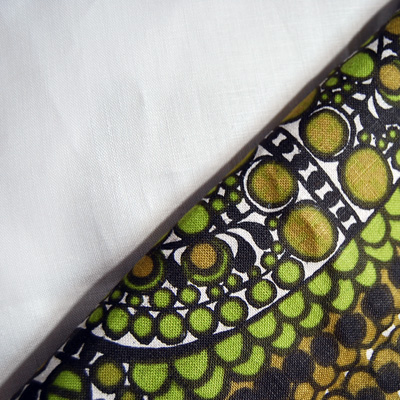
Several months ago, I bought four yards of 18" wide vintage hand-printed Norwegian linen. It was very retro, and I wasn't sure what to do with it.

Then my sister bought me several linens for my slings, and I was inspired to pair the print with a solid cream linen. 
The end result has a decorative panel (also functions as a pocket) of the vintage print on the tail.
By the way, I'm open again for business at Second Womb Slings. I have lots of gorgeous new linens and silks, and more batiks to be added for my infant scale slings.
Read more ...

Thursday, July 21, 2011

All about the breech workshop

What a whirlwind weekend...

It began Friday evening with a discussion session. Participants were able to ask questions of Peter and Betty-Anne, as well as share their own experiences with breech birth as either care providers or mothers of breech babies. The conference co-organizer, Penny Lane, opened the session with the stories of her three breech babies. It's an epic story, one that I hope to tell at a later date in more detail. (I might even turn it into a book, it's that fascinating.)

Saturday's workshop was with Dr. J. Peter O'Neill. He began with two hours of instruction and advice about vaginal breech birth. He reviewed the literature, including knowledge gained from the Hannah term breech trial and more recent European studies. He explained the Canadian breech guidelines and how they were created. Finally, he explained the mechanism of breech birth and the various maneuvers to free trapped legs, arms, and heads. Then it was time to do simulations. He and Betty-Anne had each brought a simulation mannequin, complete with a snap-on vulva and snap-on abdomen. You can imagine the wisecracks coming from a room full of birth attendants. ("Hey Rixa, your vulva's hanging out!")

The participants were all writing or typing furiously, trying to catch all of Peter's instruction and commentary. He was a fabulous instructor, and we all came away feeling confident in the skills he had taught us. He has attended about 8,000 births and between 300-400 vaginal breech births. He teaches vaginal breech, among other skills, for the Canadian ALARM courses taught to physicians, midwives, and nurses. A few highlights that I can remember from his workshop:
  • Trust your training and your instincts. Don't blame yourself for "missing" a breech prenatally--it's highly likely you didn't miss it, as babies can flip very late in pregnancy. 
  • Do vaginal breech births with a best friend--in other words, with someone who won't hesitate to tell you when you're not making wise decisions, when you're letting your emotions or your relationship with your client get in the way of the larger clinical picture. 
  • Try to keep your hands off the baby unless absolutely necessary. The more a breech baby is manipulated as it is being born, the more likely it is to do the "What the F#@!" startle reflex (Peter's words), throwing its hands up and its head back.
  • Peter did breech simulations with the mannequins on their backs, not because he feels that is the best or safest way, but because 90% of his patients choose epidurals and are largely unable to move from that position. He emphasized that the women he attends are free to choose any position they desire during labor and birth, whether for cephalic or breech presentations.
  • Pay attention to the language you use. For example, he never uses "maternal exhaustion" in his records. Instead, he writes "inadequate progress despite maximum maternal effort." He feels this keeps women from feeling like they failed if labor just did not progress, and it emphasizes the extraordinary effort that all labors entail. 
  • Don't fall into the trap of extrapolating from cephalic to breech births. What might be fine for a head-down labor might not be for a breech. He wants to see a breech labor begin spontaneously and progress steadily; in general, the time from 5-10 cms should not take much longer than 7 hours. Start-and-stop labors in a breech are a sign for caution and an indication that a vaginal birth might not be the best decision. Deciding to move to cesarean is not a failure. If certain signs suggest trouble, the decision to abandon a vaginal birth is a wise one. 
I have to say that I was beyond thrilled with Peter's workshop. He was approachable, generous, and willing to engage in an open exchange of ideas and experiences. Anyone who can keep a straight face with a room full of midwives talking about placentophagy has got my vote! I think we were all wishing we had him as a physician in our own communities.

Saturday evening was a lecture on upright breech birth by Betty-Anne Daviss. She took an anthropological approach to breech birth and reviewed the history of breech birth and maneuvers. We had booked the room for two hours, but she ended up speaking for just over an hour. We were all exhausted, and to be honest as much as I would have liked to learn more, I was glad to go back to my (not-so-posh) dorm room and rest. Several of us gathered in a lounge, snacked on cookies and Chipotle Grill wraps, and talked late into the night about birth (of course!).

Sunday's workshop was on upright breech birth with Betty-Anne. She spent the morning overviewing the various breech studies and trends in breech birth throughout the US, Canada, and Europe. I enjoyed learning about how she ended up at Dr. Frank Louwen's clinic in Frankfurt, Germany. She is part of his reserach team gathering data on upright (hands & knees) breech births. They are close to submitting their data for publication. I can't wait to read their findings. Preliminary data that Dr. Louwen presented two years ago in Ottawa showed that the upright position leads to fewer feto-maternal complications, fewer abnormal heart rate tracings during pushing stage (due to less cord compression), and lower morbidity.

Betty-Anne also explained in detail the mechanism of upright breech birth. Using a flexible pelvis and cloth doll, she explained step-by-step how a breech baby descends and turns through the maternal pelvis. At that point Gail Tully (of Spinning Babies) jumped up and started illustrating what Betty-Anne was explaining. By the end of the day, we had all sorts of lovely drawings from Gail. I hope she will reproduce them!

The afternoon was spent doing simulated hands & knees breech births with Betty-Anne and Gail. A few things I learned specific to hands & knees positioning:
  • The baby normally presents at the vaginal outlet with the butt transverse and one butt cheek rumping first, rather than facing directly forward.
  • Once the baby has been born to the umbilicus, you should see a line of "cleavage" on the baby's chest. This indicates that the arms are NOT trapped and in a good position to be born. If you don't see this fold of skin, this indicates that one or both hands are behind the head. AT this point the baby's body should be turned and the baby should be facing you straight on. If the baby remains turned sideways, this again is a bad sign, indicating an inability to descend and rotate properly due to trapped arms.
  • "Frank's nudge" (also called the Louwen maneuver) is used once the arms are born and the head is still inside the mother. Often the baby will emerge on its own. But if the head is not born relatively soon--let's say within the next contraction--this maneuver will help the head be born. First ascertain that the baby's head is facing directly forward, rather than turned to the side. If needed, turn the baby's head to face directly posterior (right towards you, since you are looking at the mother's behind as she is on her hands & knees). Use your thumbs or first two fingers and press on the baby's shoulders towards the mother's pubic bone. (Do not press on or near the clavicles, as they are prone to breaking.) This maneuver causes the back of the baby's head to press against the pubic bone and flex forward, freeing the head.

Attending the breech skills workshop this past weekend reinforced the need for open, honest, and respectful collaboration between home and hospital based providers. Dr. O'Neill's approach to helping women was simple: do what is right for mothers and babies, without regard to political or liability concerns. If a home birth transfer occurs while he's at work, he prepares whatever the situation requires (for example, he would prepare the OR and scrub in for an urgent transport). Then he greets the woman with this simple phrase: "What can I do to help?"

Read more ...

Wednesday, July 20, 2011

Home Birth Summit update

Guess who was invited to the upcoming Home Birth Consensus Summit? Me!

I am really excited to participate in this event. I am also curious to see how things play out. There's been a lot of grumbling about who was chosen and how. With a limited number of slots for each stakeholder, inevitably most of those interested (and qualified) will not be able to attend. Because of that, some have already dismissed the summit as inherently flawed. I'm not going to pass judgment on the summit, though, before it even happens.

If you have a perspective you'd like to add, please comment at the open forum for the home birth summit.
Read more ...

Sunday, July 17, 2011

New breech maneuvers

I learned several new vaginal breech maneuvers this weekend from Dr. J. Peter O'Neill, including

the Vanna White Maneuver
("Don't put this on YouTube," he'd say with a graceful sweep of his arm)

the Getting Off a Horse Maneuver

the Pringle Chip Maneuver

Learning breech birth has never been so much fun. More details forthcoming, but I wanted to say that Dr. O'Neill was a phenomenal teacher, physician, and person. I've found a new Dr. Wonderful*. If you live in Kingston, Ontario, you are lucky to have access to him.

* Other Dr. Wonderfuls include Andrew Kotaska, Robert Biter, and family practice physician "doctorjen". 
.
Read more ...

Wednesday, July 13, 2011

Lecture on upright breech birth

Please distribute widely! Click on the image to download the PDF flyer. Text-only version below.
Upright Breech Birth: 
What We Can Learn From the Germans
Lecture by Betty-Anne Daviss

Saturday, July 16, 7pm
Pharmacy Building, Room 150
Butler University

Betty-Anne Daviss has undergone extensive training in Germany in
upright breech birth. A professor at Carleton University, Daviss has
30 years of experience as a midwife in Canada.

What is upright breech birth?
A decade ago, German obstetrician Frank Louwen began doing vaginal
breech births with women in an upright (hands and knees) position. The
results were compelling—fewer fetomaternal complications, less
umbilical cord compression during the pushing stage, and reduced need
for maneuvers, leading to lower maternal and perinatal morbidity. His
Frankfurt clinic has delivered approximately 1,000 vaginal breeches in
the past decade, 90% of which were in the upright position.
Read more ...

Saturday, July 09, 2011

Wedding reception

My older sister, whose wedding we attended this May in DC, had a wedding reception at my parents' house yesterday. It was a lovely evening in our backyard. I was able to take a few pictures before my camera died.
Zari looking angelic
my sister and her husband
flowers from the garden
tables, chairs and linens were borrowed
each of us got a set of apothecary jars to take home
individual mango-lime cheesecakes
cool drinks for a warm evening
walking violin serenade

My mom, as usual, outdid herself. My sister joked that "this was mom's party, to which I was invited." My mom planned the decorations, food, and music. She cooked half of the food and had friends help make the rest. She even wrote some of the arrangements that her string quartet and violin students played.

The evening's menu:
Finger foods
  • Avocado & goat cheese crostini
  • Double tomato bruschetta
  • Filipino lumpia with sweet chili sauce
  • Pesto ravioli on skewers
  • Edamame
  • Chicken satay with peanut sauce
  • Baguettes and cheeses
  • Fresh fruits and vegetables
  • Bacon-wrapped dates stuffed with Gorgonzola
  • Endives stuffed with hummus and balela
  • Swedish meatballs
Drinks
  • Lemon/lime infused sparkling water
  • Raspberry/strawberry infused sparkling lemonade
Desserts
  • Mango-lime cheesecake
  • Blueberry-lemon cheesecake
  • Sachertorte
Read more ...

Tuesday, July 05, 2011

Bathroom renovation: final pictures

We finished renovating our master bathroom, just in time to move. It looked like this before we started and like this in the middle of renovations. We started this project when I was 6 months pregnant.

I took pictures the day before our renters (a new tenure-track professor and her husband) moved in. I love the antique vanity & mirror we found. My dad helped me refinish the wood and cut holes into the marble for the sink and faucet. We also put bun feet on the vanity to bring it up to the right height.
I had an antique silver chandelier that I had found in our house in Iowa City and had moved it with me a few times, thinking "some day I will find a use for this." (I usually don't do this, but the light fixture was really cool and I couldn't justify getting rid of it.) I used two of the five arms to make these vanity lights. I think the little shelves below the lights were for candles, back before electricity.
I miss our tub and our fancy shower...but I am sure our renters will enjoy them!
Read more ...
Related Posts Plugin for WordPress, Blogger...