Friday, July 27, 2012

How and where to learn neonatal resuscitation

I've received some inquiries about how to gain neonatal resuscitation skills, especially for non-health professionals. If there's one kind of preparation I'd recommend for all pregnant women, it's learning the basics of neonatal resuscitation. Just like we all (should!) know how to perform infant resuscitation or adult CPR or the Heimlich maneuver, we should know the basics of neonatal resuscitation. Because--as Inga's birth story illustrates--you never know when you're going to need it.

Most likely your baby will be born healthy and will breathe on its own. Most likely you'll make it to the hospital or birth center on time, or your midwife will arrive before the birth. Most likely your baby won't be born in the car, or in the subway, or on your bathroom floor when you were planning otherwise.

But...what if the birth doesn't happen as planned? That's where having some neonatal resuscitation training can be a lifesaver.

So how and where can you learn these skills? If you can afford it, take a Neonatal Resuscitation Program (NRP) workshop. Before the course, you study the textbook and take an online exam. Then you come to the workshop--typically one full day--for hands-on instruction with life-size dolls and medical equipment. Since maternity care providers are required to stay current with their NR skills, the workshops are fairly easy to find. One problem a lay person might encounter is being able to register for the course; some are limited to health care professionals only.

In the States, the Neonatal Resuscitation Program is sponsored through the AAP; click here to locate a course or instructor. Canada's NRP program is sponsored by the Canadian Pediatric Society; click here to locate courses. Many instructors do not list their courses online, so also make inquiries through your local hospitals, birth centers, or home birth midwives. 

I highly recommend Karen Strange's Newborn Breath workshop. She travels all over the States teaching NRP from an out-of-hospital perspective. You'll learn everything you need to know to pass the exam and become certified, but you'll also learn these things with the assumption that you'll be in a home or birth center setting, that you won't be cutting or clamping the cord, that you'll be resuscitating on or near the mother, etc. Karen Strange is a quirky, fun instructor and keeps the class very lively. If you want her to come to your area, you can sponsor a workshop. Her workshop costs $220, plus the textbook (~$38 used/$55 new) and online exam fee ($23.50).

What if there is no NRP class in your area, or if you can't afford one? Hook up with local midwives and learn the skills from them. Buy or ILL textbooks and study as much as you can. At a bare minimum, learn how and when to perform mouth-to-mouth and chest compressions on a newborn--before your third trimester. Still, nothing can substitute for up-to-date, hands-on training, which is why I strongly suggest taking a NRP workshop.

My NRP baby...now in pigtails!

Read more ...

Thursday, July 26, 2012

Why am I up at 2 am?

I'm sitting in the living room of my in-law's house, wrapped in a chenille blanket and eying a plastic bowl next to me. I'm pretty sure I have food poisoning. I didn't want to wake up the kids with my bathroom runs, so I'm distracting myself on the computer instead.

So because I have nothing better to do, I was re-reading an interview that Motley Vision did with my husband about his first book, a collection of short stories called Dominant Traits. It's set in southern Alberta, where I am currently visiting for a family reunion. Buy the book! So we can be rich and famous! (Just kidding about that last part.)

I keep staring at the bowl hoping to puke. I'm really tired and want to get it all over with so I can go to bed.

Later. 
Read more ...

Wednesday, July 25, 2012

World Breastfeeding Week Photo Contest

I wanted to announce a photo contest for World Breastfeeding Week (August 1-7), hosted by HealthConnect One, a national nonprofit dedicated to serving moms and babies during pregnancy and early parenting. HealthConnect One sponsors community-based doulas and breastfeeding peer counselors (more details here). 

Anyone can submit a photograph for the photo contest--whether you are a current breastfeeding Mom or breastfed your kids 30 years ago. You can also submit photographs of the lactation room at your workplace, or photographs of any other breastfeeding space established in your living room, baby's room, backyard, or anywhere!  Contest winners will be determined by popular vote.

Photo Submissions: August 1 - 7, 2012

Voting: August 8 - 15, 2012

Winners Announced: August 17, 2012

Prizes:  Camera, maternity lingerie, yoga class, and others yet to be announced!

Read more ...

Wednesday, July 18, 2012

Dutch bike on steroids

My friend sent me this link to a Portland woman--and mother of six--who transports her entire family using a Dutch bakfiets. It's pretty incredible.

I've been dreaming of adding Dutch child seats to my own bike so I can run errands on bike with all 3 kids. This woman takes it to the next level, though. Click to read the article: With six kids and no car, this mom does it all by bike.


If you want a cargo bike but don't want the cost or weight of a bakfiets, I love these Madsen cargo bikes. Some day...

Do any of you ride a bakfiets, a Madsen, or other type of cargo bike? What do you like or dislike about it?
Read more ...

Friday, July 13, 2012

Human Rights in Childbirth: Panel 5

Panel 5:
Perinatal Mortality in the Netherlands: 
Facts, Myths, and Policy

Panelists:

The morning began with a keynote speech by Raymond de Vries about having a baby in the Netherlands. I missed the first half (I slept in on purpose--I was exhausted). I listened to the rest of his presentation in the balcony while I pumped. I had been away from Inga for 48 hours at that point and was probably a full cup size larger, even after pumping a few times.

Panel 5 opened with Anna Myrte Korteweg, a mother who wrote a book about birth choices in Holland after her traumatic first birth. Her book is called Vrije Geboorte (Freedom of Birth), and she blogs here. She had planned a home birth but had to transfer to a hospital during labor. 
 
Elselijn Kingma, a philosopher and bioethicist from the UK and the Netherlands, addressed the relationhsip between science and policy. How we interpret the numbers from scientific studies isn't a given and is highly subject to variation. Our narrow focuson perinatal mortality shows that we don't equally value all members of society (i.e., we tend to gloss over mothers who are subjected to massive harms in the process of hospital births). Where people feel safe isn't objective or fact-based, ut determined by both policy and rhetoric.

Manon Benders, a pediatrician and neonatologist, presented her experiences with perinatal mortality. She works in a NICU and sees struggling babies on a daily basis. This, of course, influences her perspective on place of birth. I found a disconnect between her message--which was quite well-intentioned--and her audience. She called for what she saw as an innovative way to meet the needs of mothers who wanted to birth at home, while providing immediate access to medical and surgical care for mothers or babies who need it: a "multi-disciplinary birth center." I don't think she realized that this is exactly what a hospital is--a place where all providers are in one location--but that that very system fails to meet the needs of all pregnant women. I sensed some frustration among the audience that she didn't really get the main messages of the conference. 

Next, Ank de Jonge, first author of the large Dutch home birth study, spoke about perinatal mortality in the Netherlands. We should avoid jumping to hasty conclusions, she advised. She also noted that the intense focus on Dutch perinatal mortality is not mirrored in others coutnries with similarly high numbers. For example, Denmark has a higher term PNMR than the Netherlands, yet they don't question their maternity care system. However, because the Dutch maternity care system is different from most of Europe's, it is home birth that gets questioned and too often blamed.

Mariel Croon, a Dutch midwife and journalist, examined how money and the media in influencing attitudes towards home birth and midwifery in the Netherlands. The media has a very powerful role in this country, and midwives have been forced into a defensive role due to media reporting of recent studies. She recommended that midwives should use the media strategically and should take an offensive role the conversations about maternity care, much as Dutch obstetricians have already done. She also called for more women's voices in these debates, which are too often overwhelmed by professionals.
Read more ...

Thursday, July 05, 2012

Unsolved mysteries

Mystery #1: Dead Birds
When we came home from France, there were two dead birds in our house. One was in the entryway, the other upstairs in our bedroom. I checked every single door and window, and all were closed and sealed tight. I have NO idea how these birds got into the house.

Mystery #2: Itchy Rash
I got a strange, horribly itchy rash when I was in France. I visited the doctor twice, took 3 prescription & 2 OTC medications, and spent almost 2 weeks in misery before it started to clear up. I suspect it was an allergic reaction (possibly a photoallergic eruption) to a sunscreen. Here are my reasons:
  • the reaction showed up only where I applied sunscreen (face, arms, chest, and back of the neck) but not on any other part of my body
  • the reaction wasn't immediate 
  • I got a rash, which took a few days to appear, when I applied sunscreen to my torso as an initial test
To test my hypothesis, I drew 3 circles on my leg with a marker and applied each of the 3 sunscreens I had been using. Then I sat in the sun for a good half hour.
look at those lovely original "tomette" tiles in our apartment!

A rash started appearing 2-3 days later in the top circle, where I had applied Equate Kids Lotion. I compared its ingredients against the other two products I did not react to, but I wasn't much closer to a solution. Each sunscreen had 20-30 ingredients and very few were the same! I haven't solved this one entirely, but I've been staying away from any Wal-Mart brand sunscreens. So far haven't had any reactions to Coppertone brands.

Mystery #3: Early Miscarriage?
The day we flew home from France, my period was due to start. I had saw some red spotting before I got on the plane and figured that was it. But then, for the next 6 days, I only had very light spotting. I figured it had been a really weird period.

Then a week after I got home, I got a really heavy period. Torrential is a better word. I was completely filling a Diva Cup every 2-3 hours. My flow continued for 9-10 days, and spotting continued almost until the 14th day.

I took a pregnancy test a few hours before the heavy flow began. It was negative, but that doesn't really prove anything either way. I strongly suspect this was an early miscarriage based on the timing and volume; my cycle is always regular within +/- 1 day.

So, what do you think about these three unsolved mysteries? Any additional ideas?
Read more ...

Sunday, July 01, 2012

At the lake

Pictures from our week at the cabin...
Wheelbarrow rides with Inga's cousin (I love my dad's shirt!)
everyone got a turn
My sister's biiiiiig pregnant belly...she's due in about 4 weeks
Dio screaming when I made him go on the waverunner...of course he loved it as soon as he and Eric started
Dio being attacked by his 16-month-old cousin

playing in the hammock
Inga's dinosaur face
 
we swam a lot
Zari loved going super fast on the waverunner
on the dock
me & mini me
water trampoline
Zari's first kayak ride


Read more ...

Saturday, June 30, 2012

A lot can happen in a week

This past week we...

Bought another multi-family property. We spent Saturday ripping out loads of old carpet, layers and layers of flooring, and trash left by previous tenants. It will be really nice when we're finished with it but I am having major buyer's remorse. Why do we do this???

Went on vacation to my parent's cabin in northern Wisconsin. It took 10 hours to drive there and 14 to drive back (you'll see why later).
 
Had our car break down on the way home. The alternator pulley and belt broke about 5 hours into our trip. Fortunately we were 5 minutes from a European auto repair shop. Fortunately the shop was still open at 4 pm on a Friday. Fortunately the shop was able to locate the hard-to-find parts at a local VW dealership, since none of the auto parts stores carried them.  $550 and a few  hours later we were on our way.

Classic Eric quote: "The noise stopped! We should just keep driving." This was right after the alternator belt broke and the screeching noise stopped. I insisted we go to the shop. A minute later, the A/C failed, the power steering failed, and the alternator light went on. He conceded we should have the car looked at.

Enjoyed wonderful weather while most of the country suffered through a heat wave. Today's high is 92 F (close to 34 C) and that's cooler than last week


Had no internet access for a week. I read 2 books and about 20 magazines. I took naps in the hammock.  And I realized that I probably don't need to check my email several times a day!
Read more ...

Tuesday, June 19, 2012

Human Rights in Childbirth: Panel 4

Panel 4:
Collaboration, Competition, Money and Monopoly:
The legal status of doctors, midwives, and hospitals in pregnancy and obstetric care

Panelists:

 Barbara Hewson spoke about independent midwives in the UK and their difficulty in obtaining malpractice insurance (also called professional indemnity insurance, or PII). Recent EU regulations concerning healthcare mandate that all health care providers carry PII, which might mean the extinction of independent midwives across Europe unless they are able to find a creative solution to the insurance mandate.

She also mentioned Mary Cronk, an experienced (and now retired) British midwife known for her pithy advice. Cronk was fond of saying that doctors and midwives are the servants of the women they look after, not the masters. Hewson also referred to Cronk's strategies for when you're told "you're not allowed to do that."

Marlies Eggermont, a midwife and lawyer in Belgium, referred to the Ternovszky case and examined whether Germany, France, the Netherlands, the UK, and Belgium are in compliance with Article 8 of the European Convention on Human Rights. She concluded that these five countries have legislation in place consistent with Article 8, but that real choices are often absent. Insurance is often an issue, either availability or cost. She also noted flaws with physicians' risk communication and detection.


Becky Reed highlighted the history and closure of the Albany Midwifery Practice, which I summarized in Panel 2.


 Amali Lokugamage, a UK OB/GYN, spoke about her journey to home birth as an obstetrician. She noted the monopoly of the medical model in understanding pregnancy and childbirth. Her own experience of pregnancy opened new ways of knowing and understanding the world around her, as her left-brained self discovered right-brained thought processes for the first time. She wrote a book about her own journey to choosing a home birth ("a peak experience in my life"), called The Heart in the Womb. She also mentioned that the grading of evidence in RCOG and ACOG documents gives patient more power in negotiating their care.

Elke Heckel also spoke about the difficulties for independent midwives to find PII.


Debra Pascali-Bonaro spoke about the important role of doulas in maternity care.


Jill Arnold told her own story: pregnant with a suspected big baby, her care providers urged her to have an elective cesarean. She began researching the medical literature, disocvered that those recommendations were not supported by evidence, and refused the procedure. She named the elephant in the room in her story: that an authority figure was encouraging her to make decisions that had no medical basis.

In the ensuing discussion--which, like all of the post-panel discussions, was quite lively--I remember that Betty-Anne Daviss made a comment about both horizontal (provider to provider) and vertical violence (provider to woman) in maternity care.  We also heard about the importance of pursuing mediation before pressing charges or going to hearings.
.
Read more ...

Sunday, June 17, 2012

What are the basic needs of women in labor?

After panel 3 of the Human Rights in Childbirth Conference, the moderator abandoned the usual audience Q&A in favor of small group discussions. She challenged us to discuss one of the issues raised in the panel, then report back to the larger group.

I was sitting next to Jill Arnold, Chantal Gill'ard, and Britt Somebody (if it was you, please leave your full name in the comments!). Anna Verwaal's film had been the last item on the panel, and we first discussed why we resisted some of its emotional appeals. Then we turned to answering Michel Odent's question:
Now that we have discovered that newborn babies need their mothers, can we (re)discover the basic needs of women in labor?
I vounteered to be the spokeswoman. Here's what I reported back to the large group:

~~~~~

The four of us attempted to answer Michel Odent's question about the basic needs of women in labor. We enjoyed watching the film, but we found ourselves resisting some of its emotional appeals and its implicit assumptions that there's a right and a wrong way to give birth. We are searching for a series of truths or standards that hold true in all settings, that don't prescribe a certain way to give birth, yet that aren't so weak as to be totally useless.

Even if all women are given the most ideal, supportive birth setting possible, some women will still need medical intervention. So it's not solely about having a spontaneous, unmedicated labor. In addition, not all women desire or enjoy a "natural" birth or even a vaginal birth. Can we identify the basic needs of women in labor in ways that allow for a variety of birth experiences and a diversity of journeys?

We think we can. For those of you who like to think more left-brained, we came up with four key needs of all laboring women:

First, a right to autonomy.

 Second, a right to informed consent and refusal and the necessary information to make those decisions.

Third, real options to choose from. Autonomy and informed consent/refusal cannot exist without choice.
 
Fourth, being treated with respect & dignity.

If you're more of a right-brained thinker, these four principles can be boiled down even further into one simple question. This is the litmus test for what every woman deserves when she gives birth:
Was there love in the room?

Read more ...

Saturday, June 16, 2012

Home again

We flew back from France a week ago. I had the kids on my own again. It went something like this the whole way home:

Me: okay kids let's go. no running the wrong way on the moving sidewalks. Inga, wrong way! who needs to go pee? look, airplanes! I'm sorry that your ears hurt. try some gum to see if they will pop. no Dio you can't climb over the seat. watch out so your drink doesn't spill. Zari can you watch Inga while I use the bathroom? uh oh, Inga just ripped the magazine. look, Inga, a picture of a dog! yes, we're way up high in the sky, higher than the clouds. Dio please don't kick Zari. Could we get some more water please? (x 21 hours)

Eric: sleep. watch a movie. sleep. watch another movie. read a book. sleep. (x 21 hours)

The kids did okay on the first two flights, but by the third flight they were a mess. Zari's ears wouldn't pop and she was sobbing the whole time. Dio was shrieking because I made him stay buckled in when the light went on. Inga was screaming because 5 minutes after she finally fell asleep, Dio had to go to the bathroom and she woke when I got up to help him.

We traveled for 21 hours from start to finish, starting at 4 am. Eric got bumped on the way home--on purpose, so he could get vouchers--but that meant I was on my own the first night home. So you'd think we would all sleep like the dead after being awake for so long. But no. Dio woke up at 1:30 am (7:30 am French time) and was convinced it was time to be awake. Oh, and Zari and Inga both woke up multiple times that night, too. Thankfully we're all back on schedule now.

I've been working my way through 4 weeks of weeds in my gardens. It's hot hot hot here and unusually dry. I'm actually watering my plants, which you never do in this part of the country.

Coming up:
  • Notes on the rest of the Human Rights in Childbirth Conference
  • A set of book reviews about food, France, and raising children
  • Reviews of some new DVDs, from documentaries to prenatal bellydancing

Read more ...

Monday, June 11, 2012

Human Rights in Childbirth: Panel 3

Panel 3:
The Rights of the Baby:
The interests of the unborn child and the power to speak for those interests

Panelists:

Farah Diaz-Tello, an attorney for National Advocates for Pregnant Women, opened the panel by commenting on the legal implications of separating the mother & fetus. Pregnant women become second-class citizens when the fetus-mother are are separated, giving the fetus equal or greater rights than the woman. Pregnant women have been--and are continuing to be--punished for their health-care problems and addictions. She referred to a case in Norway where a pregnant woman terminated her pregnancy rather than face imprisonment for the duration of her pregnancy. She commented on the need for treating pregnant women with dignity and respect and ended with the question: "At what point in pregnancy does a woman start to lose her human rights?"

Roanna Rosewood, a mother of 3 children, told a moving story about her first two births via cesarean section. When she was pregnant with her third, her hospital had changed its policies and made VBAC practically impossible. Her doctor wanted to help, but her hands were tied. So Roanna chose to give birth to her third child at home. An excerpt from her presentation:
Women were created to give life and protect the interests of our children. We cannot separate from it. It is who we are. It's in the breadth of our hips that widen of their own volition to cradle them. It's in the curve of our breasts, heavy with milk to soothe them. Every month, our wombs ache in preparation to receive life because, as women, it is our responsibility, honor, and choice to bring new life into the world. We alone have earned the right to speak for our unborn babies' interests.
Roanna is currently working on a book Cut, Stapled and Mended: A Do-It-Yourself Birth  , forthcoming in 2013.

Barbara Harper, founder of WaterBirth International, first reviewed the UNICEF Convention on the Rights of the Child. In her presentation and in her letter to the conference, she touched on the growing field of epigenetics that examines how perinatal experiences affect a human years, even decades, later. A few comments for her conference letter worth mentioning:
Fear is omnipresent in modern birth rooms throughout the world. Fear of outcome, fear of litigation, fear of not following the rules and regulations set by the institution. When women were surveyed, they do not want to be in an environment that is unfriendly, non-supportive or not accommodating....

The place of birth is not as important as the cooperative effort and respectful attitude that is show to mother/baby....How we care for pregnant women, assist birthing mothers and what we do immediately after birth with mother/baby creates sequelae that influence the core of our existence as human beings. Instead of looking at a "right place" or a "wrong place" to care for women and their babies, we must look at a "cooperative best way," with complete honesty. 

Dr. Bewley, a UK OB/GYN, examined laws or regulations that currently limit pregnant women's freedom. She noted that pregnant women's liberty is constrained in several different ways: by laws that restrict work or exposure to occupational hazards, by airline travel rules, by incarceration in prison or mental health institutions, and by cultural or social stigma. In all of these cases, these limitations require sound justification. She next turned to examples of limiting pregnant women's autonomy in favor of avoiding harm to the fetus. She highlighted several real-life examples that might provoke medical professionals to limit a pregnant woman's autonomy in order to help the baby:
  • Women who are HIV+ but decline anti-retrovirals, 
  • Substance misusers
  • Jehovah's witnesses who refuse in-utero blood transfusion for hydrops
  • Woman with a personality disorder inserting tools into her uterus at 28 weeks gestation
  • Women with severe pre-eclampsia refusing hospital admission
  • Women who decline cervical cerclage in the second trimester 
  • Women who refuse to consent to a CS and whose babies are stillborn or sustained brain damage
  • Women who decline routine blood tests due to needle phobia
In these cases, actions to prevent "real and avoidable harm" were not universally beneficial: some babies were helped, others were harmed.

Dr. Bewley next addressed the differences between treating the mother as a patient versus the fetus as a patient. She highlighted the tools ("obstetric armamentarium") that obstetricians can use when counseling their patients:
  • appealing to their training, skills, and expertise
  • having a trusting relationship with the patient based on confidentiality and consent
  • listening to the patient's story
  • formulating a diagnosis, prognosis, and agreeing on a plan
  • Advising, monitoring, prescribing, operating, negotiating, and referring
  • Using friends, family, religious and community advisers
  • Heavy-duty moral persuasion (she noted that while she personally doesn't like to use this one, it *does* get used by other physicians)
She suggested abandoning the the use of force, threats, or fear.

Last, Dr. Bewley examined the possible effects of proposed "fetal rights" laws and reiterated her main point--that laws limiting pregnant women's autonomy in the name of safety will never have a universally beneficial effect. Some babies will be helped, but others will be harmed. What Dr. Bewley was implying, I think, is that certainty is elusive in medical decision-making. This makes the ethics of doctor-patient interactions all the more complicated.

Noam Zohar, a philosopher of bioethics, discussed how risk is always culturally processed. Every day, parents take much more elevated risks with their existing children than they do when they choose to give birth at home. Being a parent means weighing one marginal risk against another. He commented: "Even if the there is some increase in negative outcomes due to home birth, the absolute magnitude is so small that it is absurd to base any policy on it."

Michel Odent reminded us that we need to think long-term about what is best for babies. He expressed satisfaction that science and medicine have finally (re)discovered a core truth: that newborn babies need their mothers. The challenge for the 21st century is to find the answer to another core question: can we (re)discover the basic needs of pregnant & laboring women? 

Anna Verwaal showed a short video posing questions about the impact of birth experiences on the baby. While the images were beautiful and arresting and most of the commentary was spot-on, I (and Jill Arnold, who was sitting next to me) resisted some of the more heavy-handed rhetoric that the right kind of birth has the potential to cure the ills of the human race and that we're scarred for life if our own birth was difficult or traumatic. I turned to Jill and said, "Hey, I was born while my mother was hanging upside-down by her ankles and I think I turned out just fine!" She agreed.

I don't feel like I am somehow still processing or struggling against the circumstances of my less-than-ideal birth. This doesn't negate the need for gentleness and love and respect during the birth process; however, we need to be careful about some of the inflated claims we might make in our efforts to improve the birth experiences of mothers and babies.

Read more ...

Friday, June 08, 2012

Dutch bikes

Some tourists in the Netherlands take pictures of canals or old buildings. I take pictures of bikes.
a typical street, full of parked bikes
bikes parked in front of a theater building

old street & canal in Amsterdam, with bikes parked all over of course
lots of people doubled/tripled up on bikes (usually a parent with 2 kids, but occasionally adults would ride too!)
 Now my favorite part...all of the cool bikes & bike seats. I loved these front-end cargo bikes.
 Inside there is a seat with 2 seatbelts.
 I also saw some serious cargo bikes! You'll never get wet inside these.
Tandem bike, plus a child seat on the back

A family with 3 children lives here! You can see the parent's bike with 2 child's seats and saddlebags, and a kid's bike chained up behind it. I love the little windscreen in front of the baby seat. 
 
"No biking" signs
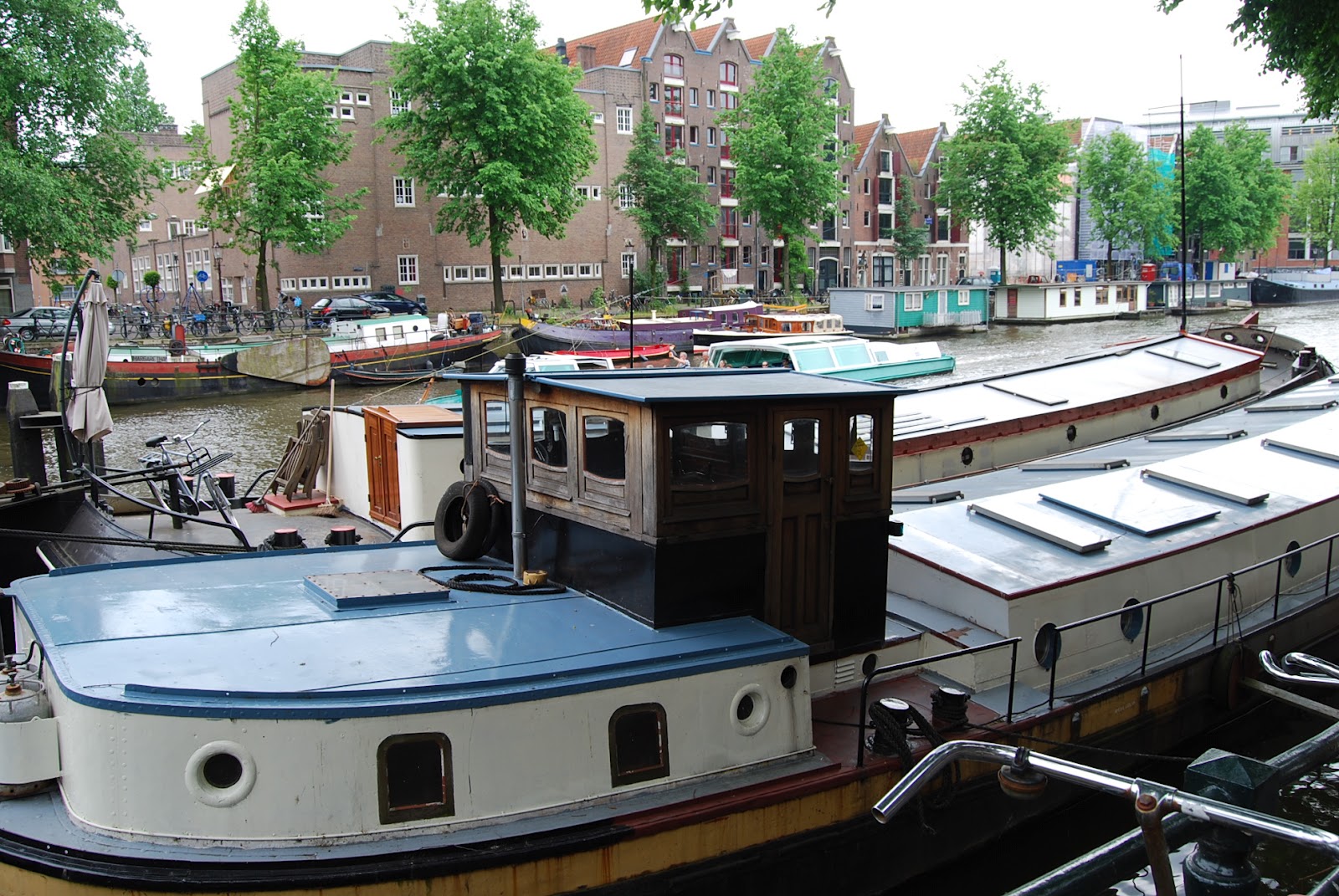
Okay, I did take one houseboat picture!


Read more ...

Thursday, June 07, 2012

Homebirth in Australia: more marginalized and less safe

Homebirth Australia just issued a statement responding to the SA Deputy Coroner's recommendations to require health care workers to reported planned "high-risk" home births (more details available at the end of this post). The statement is included in full below.

Also worth reading is Hannah Dahlen's article Pushing home birth underground raises safety concerns. Dahlen is an associate professor of midwifery at University of Western Sydney.

~~~~~

Coroner’s Recommendations:  
Short sighted and misses the point on homebirth
7 June 2012

Following an inquest in to the death of three babies, recommendations about the provision of homebirth services have been made by South Australian Deputy Coroner Anthony Schapel.

Homebirth Australia has concerns about the recommendations made by the Coroner. It is our view that, if implemented, the recommendations will lead to homebirth becoming more marginalised and less safe.

What was missing from the Coroner’s findings was any real consideration of the reasons why women choose homebirth. Lack of access to quality maternity care options and sensitive providers forces many women to turn their back on hospital care.

Listening to women, respecting their autonomy and developing services that genuinely meet their needs we will do far more to ensure the safety of mothers and babies than punitive short-sighted responses that remove options and marginalise certain choices.

Women make the choice to give birth outside a hospital with identified risk factors due to their profound dissatisfaction with the current maternity care system and in some cases because of previous hospital experiences that have left them deeply traumatised.

When our hospitals leave women so damaged after a birth that they refuse to return no matter what the risk, then we need to look at why.

Any law reform around homebirth must recognise that all women (including pregnant women) have a fundamental right to bodily autonomy and a legal right to refuse medical care.

The right of women to make decisions around the circumstances of their births and to choose homebirth has been recognised by the European Court of Human Rights.

The ability of women to make decisions about their maternity care is recognised at common law and by the Australian College of Midwives, the Royal Australian and New Zealand College of Obstetricians and Gynaecologists and the Australian Medical Association.

Women will continue to choose homebirth regardless of the legal or regulatory framework surrounding midwifery practice and other women will heed their call for support if the maternity care system fails to support them to give birth at home.

Contact: Michelle Meares – 0439 645 372

Read more ...

Wednesday, June 06, 2012

Human Rights in Childbirth: Panel 2

Panel 2:
Safety, Risk, Costs & Benefits:
Weighing Choices in childbirth

Panelists:

Peter Brocklehurst, head researcher of the Birth Place study, began the panel by presenting results from his research. This study followed women in the NHS in four birth locations: home, freestanding midwifery units, alongside midwifery units, and obstetric units.

Soo Downe spoke about how women in the UK are influenced to make choices, from newspapers to television shows (including One Born Every Minute and Call The Midwife. Although we have the data about birth outcomes, she argued, we don't have the belief in the data. She argued that we need to frame birth choices not in terms of home/hospital, but in terms of consequences.

She also mentioned a book chapter that she authored in 2010 called Towards Salutogenic Birth in the 21st Century--the book is now on my to-read list.

Hélène Vadeboncoeur spoke about VBAC. Do pregnant women have VBAC rights? She reviewed the situation in the United States, where expecting women have had to resort to legal means to gain access to VBAC. She mentioned some maternity organizations that have made significant contributions, including the White Ribbon Alliance work to ensure Respectful Maternity Care via its elaboration of the Universal Rights of Childbearing Women (PDF) and the International MotherBaby Childbirth Initiative. She concluded by discussing how evidence-based medicine has an unexpected negative consequences of leaving less space for individualization of care.

Elitsa Golab, an attorney who is involved with ICAN, spoke about the concept and historical development of informed consent in the United States. How a society upholds a person's right to informed consent reflects the values that a society places on a person's autonomy. One of the earliest important legal decisions was Schloendorff v. Society of New York Hospital, in which Justice Cardozo wrote:
Every human being of adult years and sound mind has a right to determine what shall be done with his own body; and a surgeon who performs an operation without his patient's consent commits an assault for which he is liable in damages. This is true except in cases of emergency where the patient is unconscious and where it is necessary to operate before consent can be obtained.
We currently have two standards of informed consent: a patient-based standard, and a physician-based standard. She called for moving away from a physician-based and towards a patient-based standard.

Golab also discussed what a pregnant woman can do if her informed consent is violated--does she have any legal recourse? She called for a cultural recognition that birth is an important process and that women need actual choices to be able to give informed consent.

Jennie Joseph, a British-trained midwife who currently works in Florida, argued that poor women are left disenfranchised in our maternity care system. Her statement that "capitalism, racism, classism, and sexist will kill your baby, will kill you" received a standing ovation. The basic premise of her practice is that every woman wants a healthy baby. She provides access to every woman who wants care, no matter her ability to pay. She has witnessed incredible results in birth outcomes when women--many of who were high-risk because of poverty or race--receive supportive care.

Jo Murphy-Lawless posed the question "Who are the people/groups benefiting from our current maternity care system?" (Let me give you a hint: it certainly didn't have pregnant women at the top of the list!) She discussed the evolution of a health care system to a health care industry. With ever-tightening schedules of risk, the insurance industry profits from these constraints. Another by-product of the health care industry is increased centralization of maternity care.

She suggested borrowing from the environmental movement and using the process of "positional analysis" to make the necessary connections between trends in health care and women's needs in maternity care. We also need to be sure not to focus only on women's individual experiences of birth--which are very important--but on a collective approach that examines the values we transmit to the next generation.

Marieke de Haas, an anesthesiology resident, spoke about her choice to have a vaginal breech birth at home. Just last week, her resident colleagues laughed at her when she told them she loved giving birth and wanted to do it again a week after she had her baby. When she was pregnant with her breech baby, she didn't feel safe enough to explain her wishes to her hospital-based care providers, let alone try for a physiological birth--hence her choice to birth at home. She hopes for open dialogue between women and their care providers so women feel supported enough to be really open about their hopes and wishes.

At the end of the panel presentations, Robbie Davis-Floyd spoke how health care models that are too successful often get shut down. She presented the case of the Albany Practice in London, an all-risk NHS midwifery practice with fantastic outcomes--perinatal mortality rates were 4.9/1000 in the practice, compared to 11.4/1000 in the overall borough and 7.9/1000 nationwide. Remember, this group took on women from all risk factors in an underprivileged area; these were not cherry-picked wealthy white women by any means. The Albany Midwifery model also had a much lower cesarean rate and a very high home birth rate. Despite--perhaps because of--these excellent outcomes, the practice was shut down in 2009 by King's College Hospital.

Now a few of my notes from the very lively discussion and Q&A:
  • A physiologist/pharmacologist commented about the need to study the long-term effects of drugs used in labor, especially oxytocic drugs. 
  • Karen Guilliland, a midwife from New Zealand, mentioned that they're doing a study similar to the Birth Place study and haven't seen a rise in adverse perinatal outcomes among nulliparous women. She posited that cultural/social context matters in birth outcomes, since she comes from a culture that supports midwives, women's choice, and place of birth.
  • Soo Downe referenced a report finding that where women and midwives are respected in the culture, maternal mortality is at its lowest. (Trying to find the name of the report--can anyone help?)
Some final questions that were raised:
  • How can we restore women's autonomy here and now in the world?
  • Is the legal route the only one, or the best one, to ensuring women's autonomy in childbirth?
  • What happens when women are denied autonomy in childbirth?
  • What about ethnicity and racial outcomes?
If you've made it through my summary of Panel 2, congrats to you! I'm glad you took the time, because these matters are pressing and relevant. Just today, I read that Australia might further restrict and regulate home birth women and their midwives, especially those who choose "high risk" home births. South Australia deputy coroner has recommended regulations requiring health care workers to report intended "high risk" home births. He has also proposed requiring these parents to have a consultation with a senior obstetrician about their home birth plans. See this article and this article for more details.

Rixa op-ed begins here: I strongly object to any approach that further penalizes, ostracizes, or coerces women and their midwives. It's the wrong strategy. Women who are already "obstetric refugees" because of a lack of options, previous traumatic birth experiences, or negative treatment by hospital staff, are not going to suddenly choose hospital birth if their home birth choices are further restricted. If anything, it will push these women further underground, further outside the system. It will definitely increase the rate of unassisted births.

Obstetricians have created a Pandora's box by creating an environment for childbirth that some women find unacceptably unsafe and hostile. Then, when women choose to birth outside that environment, obstetricians seek to punish the very women they were driving away. Talk about a double bind. It's like raping a woman and then punishing her for being raped.

Australian midwives are in agreement that a punitive approach is misguided. From Adelaide Now:
Australian College of Midwives' Dr Hannah Dahlen said the recommendation was concerning.

"What I think that will do is push birthing underground as some mothers will now not go near a hospital for blood tests or scans (as they did previously)," she said. "The ramifications will make the system less safe, not more safe."

Dr Dahlen said the inquest was a lost opportunity to improve the health system to provide more options to pregnant women and many felt like "refugees" who avoided hospitals after negative experiences.
If health care workers object to women choosing home births, they must realize that they have created the very conditions that drive women away from hospitals. One-third of all births ending in cesarean? Almost no chance of avoiding synthetic oxytocin at some point during labor or birth? Having to fight and negotiate for what you want, instead of simply letting go and laboring? Not "allowed" to have a VBAC or a vaginal breech birth? With these scenarios, home birth seems like a no-brainer.
Read more ...

Tuesday, June 05, 2012

15 months old!

Where has my baby gone? I have a crazy active toddler now who won't sit still for more than 2 seconds. How am I going to manage through the 3 plane rides home from France? (I'll be on my own again, since Eric wasn't able to get the same flight home.)

Inga's hair is growing in nicely...and it's curly! Who would have thought?

She often sleeps like this.

She loves to go on the playground equipment all by herself.


Inga says just a few words: mama, papa/dada, uh-oh, eew, & fish (last one learned yesterday when we were at the aquarium in Monaco)

She signs a lot more words: more, please, dog, cat, bird, fish, car, airplane, train, milk, nurse, papa, eat, shoes 
 
She just started sleeping all the way through the night, a good 12-13 hours. We were down to one 6 am waking but now she's cut that one out too. Hooray!
splashing in the "dragon pool" on the way up to the parc du chateau in Nice
aquarium in Monaco
nursing on top of the Monaco aquarium
Read more ...
Related Posts Plugin for WordPress, Blogger...